To the Limited Partners of the Ewing Morris Flexible Fixed Income Fund:
In 2021, the Flexible Fixed Income Fund Returned 8.3%. Since the Fund’s inception in early 2016, it has delivered a compound annual return of 7.1%.
This return compares to our long-term return expectations of 5% to 7% and our publicly traded high yield and investment grade benchmarks, which in 2021 returned +3.6% and -1.8%, respectively. 2021 was a very solid year for the Fund; overall, there were many sources that drove returns in the Fund, with the unifying theme being idea-specific value add, which was punctuated in a handful of positions producing outsized results in the year. In addition, contributions came from both long and short positions, as was well-evidenced by the Fund’s positive performance in November, when credit and equity markets saw a notable correction on the back of the Omicron variant’s proliferation.

Performance reflects Class P- Master Series, net of fees and expenses. Inception date of the Fund is February 1, 2016. U.S. High Yield Bonds are represented by the iShares U.S. High Yield Bond Index ETF (CAD-Hedged). Canadian Investment Grade Bonds are represented by the iShares Canadian Corporate Bond Index ETF.
The largest contributors to performance in 2021 were our investments in securities of Ziff Davis and Shaw Communications.
Since the mid-summer of 2020, we have owned a conviction-sized position in the convertible bonds of Ziff Davis (formerly known as J2 Global). Ziff Davis has been a staple of our equity strategies and one of the top-performing underlying businesses that we own at Ewing Morris. As we have been well-acquainted with the company, we were able to take full advantage in mid-2020, when an opportunity arose to enter the company’s convertible bonds at a record discount to par (the bonds traded as low as 77 cents on the dollar). Throughout 2020 and 2021, Ziff Davis has grown its earnings ahead of street and investor expectations by a wide margin, benefiting its convertible bonds which over the last year, has traded from a 103 dollar price to end the year at 122. Currently, the company is growing revenue organically in the low teens and, net of its cash and investments, has effectively no debt. In addition to its strong growth profile, the quality of the company’s earnings is excellent; Ziff Davis expects to convert 60% of its EBITDA into free cash flow. Despite these excellent attributes, Ziff Davis trades for less than 10x EBITDA. Similar digital media businesses frequently fetch multiples exceeding 15x. In our view, the investment opportunity in Ziff Davis’ bond is excellent, and what we like most is the location of the strike price of the security: $107. With the stock itself around this same price, the bonds would participate in the upside potential of the stock, yet the bonds ultimately have limited downside to par at its 2026 maturity.
In the case of Shaw Communications, we took advantage of purchasing the company’s Class 2 Preferred Shares in March, following the announcement that Rogers Communications had agreed to buy Shaw. We built our position over the first three days following the announcement. Our success with this investment was a function of several things. First, we had a solid familiarity with similar precedent transactions of this kind. A similar situation that immediately came to mind was Lowe’s acquisition of Rona, where we successfully monetized Rona’s preferred shares in the context of that deal in 2016. Second, our fund’s relatively nimble size allowed us to attain our desired position size quickly. Third, our ability to glean insight into the legal structuring and funding nuances of the transaction allowed us to conclude that there was a high likelihood that Shaw’s preferred share issue would be redeemed at its optional June redemption date at a price 25% higher than the price at which we were able to accumulate our position in March. What we liked best about the situation is that the thesis did not actually rely on the greater corporate transaction closing. We will continue to look at opportunities such as these when they arise in the Canadian preferred space as we are continually surprised to see marked deviations between price and value in relation to corporate transactions.
Everybody’s Talking About Inflation: Not a Friendly Investment Character
Inflation is the principal macro-level risk we see in today’s pricey fixed income market. While speculation about future inflation is fraught with error, there is high investment risk associated with a complacent view at today’s level of interest rates. Our thinking is that, contrary to central bankers’ public narrative, inflation has a risk of becoming less anchored than most would like. This is a concern because we are observing whole markets of fixed income securities - mainly securities residing in the investment grade space - that we expect to realize guaranteed losses of purchasing power over their investment life.
Our risk assessment is informed by both valuation risk and fundamental risk. From a valuation perspective, it is easy to make an argument that a 2% rate on a 30 year US Treasury bond does not adequately compensate investors when monetary policy itself seeks to achieve a 2% inflation rate.
From a fundamental perspective, there are some very deep-rooted inflationary factors emerging. Declining international trust and consumer expectations for inflation are two factors we see that are among the most important.
Lower Trust = Higher Inflation
It turns out that changes in trust between nations produce economic consequences. Increasing trust is deflationary and decreasing trust is inflationary. The reason for this is that trust is a prerequisite for ongoing trading relationships. If trust between countries declines sufficiently, the countries will eventually look to in-source the goods or services they are seeking. The production of formerly imported goods or services are brought back into countries that are not best suited to produce them and thus have higher costs of production. This simple change is quite obviously inflationary. Furthermore, history tells us the tides of geopolitical trust are measured in decades and not in years. We would not define a multi-decade dynamic as “transitory.” The reality is that the deflationary effects of globalization we have enjoyed for decades are indeed reversing. For example, in the semiconductor space, for the first time in more than two decades, TSMC is building a fabrication plant in the US at the cost of 12 billion dollars. In late 2020, China officially put a blockade on coal from Australia, relying on higher cost supply from its own domestic production and other trading partners. This is not a dynamic we expect to show up in inflation numbers in the short term, but this is the type of inflation that interest rate hikes may not be able to moderate.
Higher Consumer Inflation Expectations = Higher Inflation
A very pernicious driver of inflation is the mere expectation of higher inflation. For this reason, it’s not a surprise to us that the Federal Reserve downplayed inflation effects as “transitory,” given that there’s no upside in setting persistently higher inflation expectations. The canaries in the inflation expectation coal mine are “cost-of-living-adjustments” embedded in labor contracts. These COLA provisions contribute to a “wage-price spiral” and durable inflation. And we are seeing COLAs take root once again. In November 10,000 union workers at John Deere successfully negotiated quarterly inflation adjustments in addition to a 10% raise, two 5% raises and two large bonuses through 2026. Unionized employees at Kellogg also recently ratified a labor contract with COLA provisions. Finally, in a thoroughly ironic development, central bank staff are arguing for more pay based on inflation as a Bloomberg headline recently read: “ECB Staff Union Demands More Pay to Guard Against Inflation.” Developments like these may be hair raising for central bankers and fixed income investors alike.
What Inflation Means for “Low-Risk” Investment Strategies
A principal goal of our approach is to minimize the risk of permanent loss (what we consider to be true investment risk) and control volatility. We would posit that “permanent loss” can also be considered “permanent loss of purchasing power,” a concept that takes into account the impact of inflation on capital. Even at Central Banks’ long-term expectations for inflation, one dollar today needs to grow by about 2% on an after-tax basis to avoid loss of purchasing power. From this perspective, it can be understood that long term allocations to cash or investment grade securities effectively ensures permanent loss of purchasing power. Even at a 2% rate of inflation, a five-year holding period would result in an approximate 10% impairment on cash relative to the future cost of living. Our view is that higher yielding fixed income investments and strategies that carry low-risk, mid-to-high single digit returns are one of the few conservative means of minimizing loss of purchasing power while also maintaining potential for accumulation of substantial real returns over the long term.
Our Approach in the Current Situation
The challenges that confront us are clear: inflation running well-ahead of prevailing interest rates, and we see elevated valuations in risk markets. There are no obvious traditional solutions to these challenges but due to our flexible, unconstrained approach, we see avenues to thrive in this market context.
With excesses, bring opportunity and we are taking advantage of several dynamics.
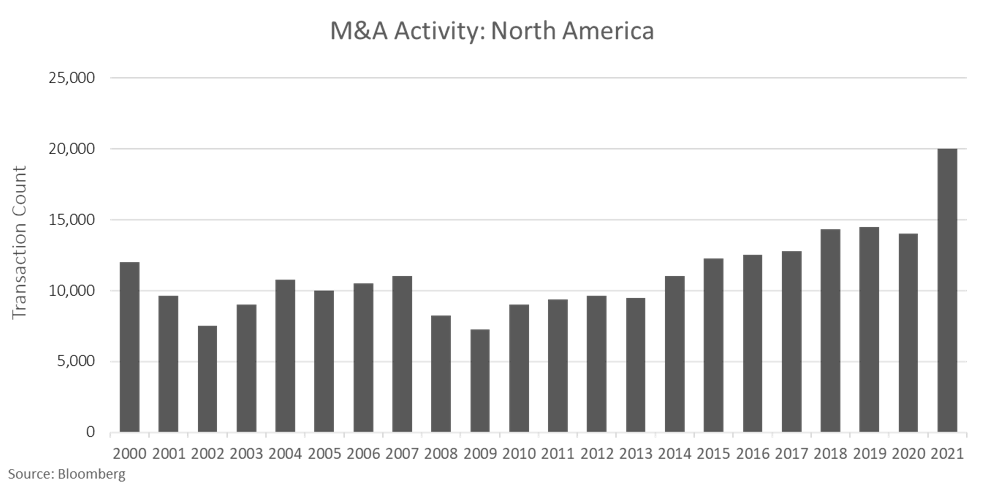
First, an important investment dynamic that arises from such easy credit conditions is plenty of corporate actions - mergers and acquisitions being the most common form. These events tend to have important consequences for the pricing of corporate debt securities of all companies involved and we seek to identify and monetize the sources of “Structural Value” in securities involved with or prospectively exposed to corporate actions. We have seen M&A activity at a record pace in 2021 and as of this writing, the conditions for this continue.
The reason why Structural Value investments are appealing to us is because bond investors typically focus on traditional drivers of credit pricing such as a company’s financial condition, cash flow characteristics, leverage, management’s capital strategy and the term structure of a given debt security. Often, that is where the analysis ends. However, there are special circumstances where value in a debt investment is ultimately driven by dynamics that reside outside of these conventional models for credit pricing. Investments in securities with Structural Value have different, often hidden, drivers of returns. The most common structural sources of value can be found in a bond's covenant structure, its call (refinancing) structure and its capital or corporate structure positioning. Looking carefully at the subtle aspects unique to the structure of each debt security can uncover exceptional, unrecognized value; value which typically becomes recognized by the market within foreseeable time horizons and most often in connection to capital market activity and corporate actions. This year’s investment in Shaw Communications was an excellent example of this. Approximately 40% of the portfolio is invested in the “Structural Value” category, which dramatically reduces the Fund’s exposure to interest rates and inflation.
Second, we are starting find excellent value in two parts of the market that feature high quality credits with low dollar price bonds. These two areas are BB rated traditional high yield bonds that were issued in mid 2021 and “busted” convertible bonds that were issued mostly in 2020 and 2021. In the case of the traditional high yield bond opportunity set, the BB high yield bond market saw a low in yield of just under 2.8% last year. It is not a surprise that many companies were issuing high yield bonds at these extremely low costs of capital. Since then, we’ve seen a meaningful increase in interest rates, which has taken the prices of these bonds down into the 90’s or even the 80’s. Given many of these BB-rated issuer’s credit condition is largely unchanged, the bonds offer better value than they did before. In the US convertible bond arena, we’re seeing scores of bond issues trading in the 80’s and lower, but the driver of the declines in this space are different. Most of these convertible bonds were issued in the last two years and we have seen the optionality of the convertible bond vanish as the price of the stock underlying the bonds have declined dramatically. What is most interesting, however, is that many of these issuers have high quality underlying businesses and their declining stock prices were a simple recalibration of unrealistic market expectations that we saw assigned to high quality growth stories; similar to the BB space described earlier, the credit quality of many of these businesses hasn’t changed either, yet valuation has improved. The fly in the ointment of these emerging areas of opportunity, however, is that the yields of these securities are still generally modest. However, we believe an underappreciated quality of the securities is the Structural Value angle where bonds that are priced with large discounts to par now carry hidden option value. Namely, through the “change of control” covenant found in high yield bonds and the “fundamental change” covenant found in convertible bonds. These covenants can easily introduce nice overnight surprises of 10-25 percent, as a result of a company takeover. By selecting bonds in safe credits that have takeout optionality, the 4-5% yield we may be harvesting can turn into substantially more. An active M&A environment is exactly one that increases the option value of covenants like these, and that is the environment that we find ourselves in currently. To see evidence of this emerging dynamic in the market we need to look no further than this week’s announcement of Take-Two Interactive’s move to merge with Zynga. Zynga has convertible bonds trading around 90 cents on the dollar, which promptly moved up 10 points on the news on account of the bond’s Fundamental Change covenant. This option value is demonstrably real and we will seek to monetize it in 2022.
Third, as a consequence of the central bank intervention, the market remains awash with capital and distortions remain in credit, particularly in the long-dated investment grade market. We have communicated about the dynamics of this in past letters, and we have acted with conviction to take advantage of historically low long-term corporate bond credit spreads. It is with reasonable frequency that the corporate credit market sees large increases in credit spreads, comfortably averaging more than one percent in magnitude. It is difficult to predict exactly when, but widenings like these have happened in four out of the last ten years - a 40% “base rate.” Given the very long duration of these investments, corporate bonds can generally be expected to drop about 20% in price in an such a circumstance . Currently long-dated credit spreads are about 1.3%, meaning that if things don’t go wrong, investors can expect to bag an extra 1.3% for taking that bond’s credit risk. But if the environment changes as it has in the past, losses of 20% or more could be the base case. To us, it does not take much number crunching to figure the risk reward in this sector is so bad that it is worth betting against. And that’s what we have done. In our view, the hedge substantially reduces the Fund’s overall risk to market shocks, while also carrying a positive expected return over its holding period. However, we would offer a word on expectations: it is useful to note that while our hedges in investment grade should provide excellent protection for the portfolio over time , the tracking of the hedge against our long positions in non-crisis market backdrops may see some deviation. History tells us that this deviation could easily be measured in months, so evaluation of this hedge’s effectiveness is best measured over quarters rather than over shorter time periods.
Outlook
The market is entering the new year much the way it entered 2021: with a 4.3% yield and a lot of capital markets activity. We are most excited about the latter as corporate transactions create opportunities for us to bring our skills to the table, identifying mispriced securities in the context of announced or prospective corporate transactions and creating upside optionality in discounted bonds of high-quality issuers.
We can see markets fluctuating against a more delicate narrative, where concerns of inflation, continued economic threats from the pandemic and geopolitical tensions are colliding with artificially low rates and expensive valuations in risk markets. Given this dynamic, it wouldn’t be a surprise to us to see a volatile year ahead. Despite this, given the portfolio’s position and opportunity set, we look forward to what this year has to bring.
Thank you for your investment in the Ewing Morris Flexible Fixed Income Fund.
Inception date of the Flexible Fixed Income Fund is February 1, 2016. Flexible Fixed Income Fund returns reflect Class P - Master Series, net of fees and expenses. We have listed the iShares U.S. High Yield Bond Index ETF (CAD-Hedged) and iShares Canadian Corporate Bond Index ETF as benchmark indices as these are widely known and used benchmark indices for fixed income markets. The Fund has a flexible investment mandate and thus these benchmark indices are provided for information only. Comparisons to benchmarks and indices have limitations. The Fund does not invest in all, or necessarily any, of the securities that compose the referenced benchmark indices, and the Fund portfolio may contain, among other things, options, short positions and other securities, concentrated levels of securities and may employ leverage not found in these indices. As a result, no market indices are directly comparable to the results of the Fund. Past performance does not guarantee future returns. This letter does not constitute an offer to sell units of any Ewing Morris Fund, collectively, “Ewing Morris Funds”. Units of Ewing Morris Funds are only available to investors who meet investor suitability and sophistication requirements. While information prepared in this report is believed to be accurate, Ewing Morris & Co. Investment Partners Ltd. makes no warranty as to the completeness or accuracy nor can it accept responsibility for errors in the report. This report is not intended for public use or distribution. There can be no guarantee that any projection, forecast or opinion will be realized. All information provided is for informational purposes only and should not be construed as personal investment advice. Users of these materials are advised to conduct their own analysis prior to making any investment decision. Source: Capital IQ, Bloomberg and Ewing Morris. As of December 31, 2021.
To the Limited Partners of the Ewing Morris Flexible Fixed Income Fund:
In 2021, the Flexible Fixed Income Fund Returned 8.3%. Since the Fund’s inception in early 2016, it has delivered a compound annual return of 7.1%.
This return compares to our long-term return expectations of 5% to 7% and our publicly traded high yield and investment grade benchmarks, which in 2021 returned +3.6% and -1.8%, respectively. 2021 was a very solid year for the Fund; overall, there were many sources that drove returns in the Fund, with the unifying theme being idea-specific value add, which was punctuated in a handful of positions producing outsized results in the year. In addition, contributions came from both long and short positions, as was well-evidenced by the Fund’s positive performance in November, when credit and equity markets saw a notable correction on the back of the Omicron variant’s proliferation.
Performance reflects Class P- Master Series, net of fees and expenses. Inception date of the Fund is February 1, 2016. U.S. High Yield Bonds are represented by the iShares U.S. High Yield Bond Index ETF (CAD-Hedged). Canadian Investment Grade Bonds are represented by the iShares Canadian Corporate Bond Index ETF.
The largest contributors to performance in 2021 were our investments in securities of Ziff Davis and Shaw Communications.
Since the mid-summer of 2020, we have owned a conviction-sized position in the convertible bonds of Ziff Davis (formerly known as J2 Global). Ziff Davis has been a staple of our equity strategies and one of the top-performing underlying businesses that we own at Ewing Morris. As we have been well-acquainted with the company, we were able to take full advantage in mid-2020, when an opportunity arose to enter the company’s convertible bonds at a record discount to par (the bonds traded as low as 77 cents on the dollar). Throughout 2020 and 2021, Ziff Davis has grown its earnings ahead of street and investor expectations by a wide margin, benefiting its convertible bonds which over the last year, has traded from a 103 dollar price to end the year at 122. Currently, the company is growing revenue organically in the low teens and, net of its cash and investments, has effectively no debt. In addition to its strong growth profile, the quality of the company’s earnings is excellent; Ziff Davis expects to convert 60% of its EBITDA into free cash flow. Despite these excellent attributes, Ziff Davis trades for less than 10x EBITDA. Similar digital media businesses frequently fetch multiples exceeding 15x. In our view, the investment opportunity in Ziff Davis’ bond is excellent, and what we like most is the location of the strike price of the security: $107. With the stock itself around this same price, the bonds would participate in the upside potential of the stock, yet the bonds ultimately have limited downside to par at its 2026 maturity.
In the case of Shaw Communications, we took advantage of purchasing the company’s Class 2 Preferred Shares in March, following the announcement that Rogers Communications had agreed to buy Shaw. We built our position over the first three days following the announcement. Our success with this investment was a function of several things. First, we had a solid familiarity with similar precedent transactions of this kind. A similar situation that immediately came to mind was Lowe’s acquisition of Rona, where we successfully monetized Rona’s preferred shares in the context of that deal in 2016. Second, our fund’s relatively nimble size allowed us to attain our desired position size quickly. Third, our ability to glean insight into the legal structuring and funding nuances of the transaction allowed us to conclude that there was a high likelihood that Shaw’s preferred share issue would be redeemed at its optional June redemption date at a price 25% higher than the price at which we were able to accumulate our position in March. What we liked best about the situation is that the thesis did not actually rely on the greater corporate transaction closing. We will continue to look at opportunities such as these when they arise in the Canadian preferred space as we are continually surprised to see marked deviations between price and value in relation to corporate transactions.
Everybody’s Talking About Inflation: Not a Friendly Investment Character
Inflation is the principal macro-level risk we see in today’s pricey fixed income market. While speculation about future inflation is fraught with error, there is high investment risk associated with a complacent view at today’s level of interest rates. Our thinking is that, contrary to central bankers’ public narrative, inflation has a risk of becoming less anchored than most would like. This is a concern because we are observing whole markets of fixed income securities - mainly securities residing in the investment grade space - that we expect to realize guaranteed losses of purchasing power over their investment life.
Our risk assessment is informed by both valuation risk and fundamental risk. From a valuation perspective, it is easy to make an argument that a 2% rate on a 30 year US Treasury bond does not adequately compensate investors when monetary policy itself seeks to achieve a 2% inflation rate.
From a fundamental perspective, there are some very deep-rooted inflationary factors emerging. Declining international trust and consumer expectations for inflation are two factors we see that are among the most important.
Lower Trust = Higher Inflation
It turns out that changes in trust between nations produce economic consequences. Increasing trust is deflationary and decreasing trust is inflationary. The reason for this is that trust is a prerequisite for ongoing trading relationships. If trust between countries declines sufficiently, the countries will eventually look to in-source the goods or services they are seeking. The production of formerly imported goods or services are brought back into countries that are not best suited to produce them and thus have higher costs of production. This simple change is quite obviously inflationary. Furthermore, history tells us the tides of geopolitical trust are measured in decades and not in years. We would not define a multi-decade dynamic as “transitory.” The reality is that the deflationary effects of globalization we have enjoyed for decades are indeed reversing. For example, in the semiconductor space, for the first time in more than two decades, TSMC is building a fabrication plant in the US at the cost of 12 billion dollars. In late 2020, China officially put a blockade on coal from Australia, relying on higher cost supply from its own domestic production and other trading partners. This is not a dynamic we expect to show up in inflation numbers in the short term, but this is the type of inflation that interest rate hikes may not be able to moderate.
Higher Consumer Inflation Expectations = Higher Inflation
A very pernicious driver of inflation is the mere expectation of higher inflation. For this reason, it’s not a surprise to us that the Federal Reserve downplayed inflation effects as “transitory,” given that there’s no upside in setting persistently higher inflation expectations. The canaries in the inflation expectation coal mine are “cost-of-living-adjustments” embedded in labor contracts. These COLA provisions contribute to a “wage-price spiral” and durable inflation. And we are seeing COLAs take root once again. In November 10,000 union workers at John Deere successfully negotiated quarterly inflation adjustments in addition to a 10% raise, two 5% raises and two large bonuses through 2026. Unionized employees at Kellogg also recently ratified a labor contract with COLA provisions. Finally, in a thoroughly ironic development, central bank staff are arguing for more pay based on inflation as a Bloomberg headline recently read: “ECB Staff Union Demands More Pay to Guard Against Inflation.” Developments like these may be hair raising for central bankers and fixed income investors alike.
What Inflation Means for “Low-Risk” Investment Strategies
A principal goal of our approach is to minimize the risk of permanent loss (what we consider to be true investment risk) and control volatility. We would posit that “permanent loss” can also be considered “permanent loss of purchasing power,” a concept that takes into account the impact of inflation on capital. Even at Central Banks’ long-term expectations for inflation, one dollar today needs to grow by about 2% on an after-tax basis to avoid loss of purchasing power. From this perspective, it can be understood that long term allocations to cash or investment grade securities effectively ensures permanent loss of purchasing power. Even at a 2% rate of inflation, a five-year holding period would result in an approximate 10% impairment on cash relative to the future cost of living. Our view is that higher yielding fixed income investments and strategies that carry low-risk, mid-to-high single digit returns are one of the few conservative means of minimizing loss of purchasing power while also maintaining potential for accumulation of substantial real returns over the long term.
Our Approach in the Current Situation
The challenges that confront us are clear: inflation running well-ahead of prevailing interest rates, and we see elevated valuations in risk markets. There are no obvious traditional solutions to these challenges but due to our flexible, unconstrained approach, we see avenues to thrive in this market context.
With excesses, bring opportunity and we are taking advantage of several dynamics.
First, an important investment dynamic that arises from such easy credit conditions is plenty of corporate actions - mergers and acquisitions being the most common form. These events tend to have important consequences for the pricing of corporate debt securities of all companies involved and we seek to identify and monetize the sources of “Structural Value” in securities involved with or prospectively exposed to corporate actions. We have seen M&A activity at a record pace in 2021 and as of this writing, the conditions for this continue.
The reason why Structural Value investments are appealing to us is because bond investors typically focus on traditional drivers of credit pricing such as a company’s financial condition, cash flow characteristics, leverage, management’s capital strategy and the term structure of a given debt security. Often, that is where the analysis ends. However, there are special circumstances where value in a debt investment is ultimately driven by dynamics that reside outside of these conventional models for credit pricing. Investments in securities with Structural Value have different, often hidden, drivers of returns. The most common structural sources of value can be found in a bond's covenant structure, its call (refinancing) structure and its capital or corporate structure positioning. Looking carefully at the subtle aspects unique to the structure of each debt security can uncover exceptional, unrecognized value; value which typically becomes recognized by the market within foreseeable time horizons and most often in connection to capital market activity and corporate actions. This year’s investment in Shaw Communications was an excellent example of this. Approximately 40% of the portfolio is invested in the “Structural Value” category, which dramatically reduces the Fund’s exposure to interest rates and inflation.
Second, we are starting find excellent value in two parts of the market that feature high quality credits with low dollar price bonds. These two areas are BB rated traditional high yield bonds that were issued in mid 2021 and “busted” convertible bonds that were issued mostly in 2020 and 2021. In the case of the traditional high yield bond opportunity set, the BB high yield bond market saw a low in yield of just under 2.8% last year. It is not a surprise that many companies were issuing high yield bonds at these extremely low costs of capital. Since then, we’ve seen a meaningful increase in interest rates, which has taken the prices of these bonds down into the 90’s or even the 80’s. Given many of these BB-rated issuer’s credit condition is largely unchanged, the bonds offer better value than they did before. In the US convertible bond arena, we’re seeing scores of bond issues trading in the 80’s and lower, but the driver of the declines in this space are different. Most of these convertible bonds were issued in the last two years and we have seen the optionality of the convertible bond vanish as the price of the stock underlying the bonds have declined dramatically. What is most interesting, however, is that many of these issuers have high quality underlying businesses and their declining stock prices were a simple recalibration of unrealistic market expectations that we saw assigned to high quality growth stories; similar to the BB space described earlier, the credit quality of many of these businesses hasn’t changed either, yet valuation has improved. The fly in the ointment of these emerging areas of opportunity, however, is that the yields of these securities are still generally modest. However, we believe an underappreciated quality of the securities is the Structural Value angle where bonds that are priced with large discounts to par now carry hidden option value. Namely, through the “change of control” covenant found in high yield bonds and the “fundamental change” covenant found in convertible bonds. These covenants can easily introduce nice overnight surprises of 10-25 percent, as a result of a company takeover. By selecting bonds in safe credits that have takeout optionality, the 4-5% yield we may be harvesting can turn into substantially more. An active M&A environment is exactly one that increases the option value of covenants like these, and that is the environment that we find ourselves in currently. To see evidence of this emerging dynamic in the market we need to look no further than this week’s announcement of Take-Two Interactive’s move to merge with Zynga. Zynga has convertible bonds trading around 90 cents on the dollar, which promptly moved up 10 points on the news on account of the bond’s Fundamental Change covenant. This option value is demonstrably real and we will seek to monetize it in 2022.
Third, as a consequence of the central bank intervention, the market remains awash with capital and distortions remain in credit, particularly in the long-dated investment grade market. We have communicated about the dynamics of this in past letters, and we have acted with conviction to take advantage of historically low long-term corporate bond credit spreads. It is with reasonable frequency that the corporate credit market sees large increases in credit spreads, comfortably averaging more than one percent in magnitude. It is difficult to predict exactly when, but widenings like these have happened in four out of the last ten years - a 40% “base rate.” Given the very long duration of these investments, corporate bonds can generally be expected to drop about 20% in price in an such a circumstance . Currently long-dated credit spreads are about 1.3%, meaning that if things don’t go wrong, investors can expect to bag an extra 1.3% for taking that bond’s credit risk. But if the environment changes as it has in the past, losses of 20% or more could be the base case. To us, it does not take much number crunching to figure the risk reward in this sector is so bad that it is worth betting against. And that’s what we have done. In our view, the hedge substantially reduces the Fund’s overall risk to market shocks, while also carrying a positive expected return over its holding period. However, we would offer a word on expectations: it is useful to note that while our hedges in investment grade should provide excellent protection for the portfolio over time , the tracking of the hedge against our long positions in non-crisis market backdrops may see some deviation. History tells us that this deviation could easily be measured in months, so evaluation of this hedge’s effectiveness is best measured over quarters rather than over shorter time periods.
Outlook
The market is entering the new year much the way it entered 2021: with a 4.3% yield and a lot of capital markets activity. We are most excited about the latter as corporate transactions create opportunities for us to bring our skills to the table, identifying mispriced securities in the context of announced or prospective corporate transactions and creating upside optionality in discounted bonds of high-quality issuers.
We can see markets fluctuating against a more delicate narrative, where concerns of inflation, continued economic threats from the pandemic and geopolitical tensions are colliding with artificially low rates and expensive valuations in risk markets. Given this dynamic, it wouldn’t be a surprise to us to see a volatile year ahead. Despite this, given the portfolio’s position and opportunity set, we look forward to what this year has to bring.
Thank you for your investment in the Ewing Morris Flexible Fixed Income Fund.
Inception date of the Flexible Fixed Income Fund is February 1, 2016. Flexible Fixed Income Fund returns reflect Class P - Master Series, net of fees and expenses. We have listed the iShares U.S. High Yield Bond Index ETF (CAD-Hedged) and iShares Canadian Corporate Bond Index ETF as benchmark indices as these are widely known and used benchmark indices for fixed income markets. The Fund has a flexible investment mandate and thus these benchmark indices are provided for information only. Comparisons to benchmarks and indices have limitations. The Fund does not invest in all, or necessarily any, of the securities that compose the referenced benchmark indices, and the Fund portfolio may contain, among other things, options, short positions and other securities, concentrated levels of securities and may employ leverage not found in these indices. As a result, no market indices are directly comparable to the results of the Fund. Past performance does not guarantee future returns. This letter does not constitute an offer to sell units of any Ewing Morris Fund, collectively, “Ewing Morris Funds”. Units of Ewing Morris Funds are only available to investors who meet investor suitability and sophistication requirements. While information prepared in this report is believed to be accurate, Ewing Morris & Co. Investment Partners Ltd. makes no warranty as to the completeness or accuracy nor can it accept responsibility for errors in the report. This report is not intended for public use or distribution. There can be no guarantee that any projection, forecast or opinion will be realized. All information provided is for informational purposes only and should not be construed as personal investment advice. Users of these materials are advised to conduct their own analysis prior to making any investment decision. Source: Capital IQ, Bloomberg and Ewing Morris. As of December 31, 2021.
To the Limited Partners of the Ewing Morris Flexible Fixed Income Fund:
In 2021, the Flexible Fixed Income Fund Returned 8.3%. Since the Fund’s inception in early 2016, it has delivered a compound annual return of 7.1%.
This return compares to our long-term return expectations of 5% to 7% and our publicly traded high yield and investment grade benchmarks, which in 2021 returned +3.6% and -1.8%, respectively. 2021 was a very solid year for the Fund; overall, there were many sources that drove returns in the Fund, with the unifying theme being idea-specific value add, which was punctuated in a handful of positions producing outsized results in the year. In addition, contributions came from both long and short positions, as was well-evidenced by the Fund’s positive performance in November, when credit and equity markets saw a notable correction on the back of the Omicron variant’s proliferation.
Performance reflects Class P- Master Series, net of fees and expenses. Inception date of the Fund is February 1, 2016. U.S. High Yield Bonds are represented by the iShares U.S. High Yield Bond Index ETF (CAD-Hedged). Canadian Investment Grade Bonds are represented by the iShares Canadian Corporate Bond Index ETF.
The largest contributors to performance in 2021 were our investments in securities of Ziff Davis and Shaw Communications.
Since the mid-summer of 2020, we have owned a conviction-sized position in the convertible bonds of Ziff Davis (formerly known as J2 Global). Ziff Davis has been a staple of our equity strategies and one of the top-performing underlying businesses that we own at Ewing Morris. As we have been well-acquainted with the company, we were able to take full advantage in mid-2020, when an opportunity arose to enter the company’s convertible bonds at a record discount to par (the bonds traded as low as 77 cents on the dollar). Throughout 2020 and 2021, Ziff Davis has grown its earnings ahead of street and investor expectations by a wide margin, benefiting its convertible bonds which over the last year, has traded from a 103 dollar price to end the year at 122. Currently, the company is growing revenue organically in the low teens and, net of its cash and investments, has effectively no debt. In addition to its strong growth profile, the quality of the company’s earnings is excellent; Ziff Davis expects to convert 60% of its EBITDA into free cash flow. Despite these excellent attributes, Ziff Davis trades for less than 10x EBITDA. Similar digital media businesses frequently fetch multiples exceeding 15x. In our view, the investment opportunity in Ziff Davis’ bond is excellent, and what we like most is the location of the strike price of the security: $107. With the stock itself around this same price, the bonds would participate in the upside potential of the stock, yet the bonds ultimately have limited downside to par at its 2026 maturity.
In the case of Shaw Communications, we took advantage of purchasing the company’s Class 2 Preferred Shares in March, following the announcement that Rogers Communications had agreed to buy Shaw. We built our position over the first three days following the announcement. Our success with this investment was a function of several things. First, we had a solid familiarity with similar precedent transactions of this kind. A similar situation that immediately came to mind was Lowe’s acquisition of Rona, where we successfully monetized Rona’s preferred shares in the context of that deal in 2016. Second, our fund’s relatively nimble size allowed us to attain our desired position size quickly. Third, our ability to glean insight into the legal structuring and funding nuances of the transaction allowed us to conclude that there was a high likelihood that Shaw’s preferred share issue would be redeemed at its optional June redemption date at a price 25% higher than the price at which we were able to accumulate our position in March. What we liked best about the situation is that the thesis did not actually rely on the greater corporate transaction closing. We will continue to look at opportunities such as these when they arise in the Canadian preferred space as we are continually surprised to see marked deviations between price and value in relation to corporate transactions.
Everybody’s Talking About Inflation: Not a Friendly Investment Character
Inflation is the principal macro-level risk we see in today’s pricey fixed income market. While speculation about future inflation is fraught with error, there is high investment risk associated with a complacent view at today’s level of interest rates. Our thinking is that, contrary to central bankers’ public narrative, inflation has a risk of becoming less anchored than most would like. This is a concern because we are observing whole markets of fixed income securities - mainly securities residing in the investment grade space - that we expect to realize guaranteed losses of purchasing power over their investment life.
Our risk assessment is informed by both valuation risk and fundamental risk. From a valuation perspective, it is easy to make an argument that a 2% rate on a 30 year US Treasury bond does not adequately compensate investors when monetary policy itself seeks to achieve a 2% inflation rate.
From a fundamental perspective, there are some very deep-rooted inflationary factors emerging. Declining international trust and consumer expectations for inflation are two factors we see that are among the most important.
Lower Trust = Higher Inflation
It turns out that changes in trust between nations produce economic consequences. Increasing trust is deflationary and decreasing trust is inflationary. The reason for this is that trust is a prerequisite for ongoing trading relationships. If trust between countries declines sufficiently, the countries will eventually look to in-source the goods or services they are seeking. The production of formerly imported goods or services are brought back into countries that are not best suited to produce them and thus have higher costs of production. This simple change is quite obviously inflationary. Furthermore, history tells us the tides of geopolitical trust are measured in decades and not in years. We would not define a multi-decade dynamic as “transitory.” The reality is that the deflationary effects of globalization we have enjoyed for decades are indeed reversing. For example, in the semiconductor space, for the first time in more than two decades, TSMC is building a fabrication plant in the US at the cost of 12 billion dollars. In late 2020, China officially put a blockade on coal from Australia, relying on higher cost supply from its own domestic production and other trading partners. This is not a dynamic we expect to show up in inflation numbers in the short term, but this is the type of inflation that interest rate hikes may not be able to moderate.
Higher Consumer Inflation Expectations = Higher Inflation
A very pernicious driver of inflation is the mere expectation of higher inflation. For this reason, it’s not a surprise to us that the Federal Reserve downplayed inflation effects as “transitory,” given that there’s no upside in setting persistently higher inflation expectations. The canaries in the inflation expectation coal mine are “cost-of-living-adjustments” embedded in labor contracts. These COLA provisions contribute to a “wage-price spiral” and durable inflation. And we are seeing COLAs take root once again. In November 10,000 union workers at John Deere successfully negotiated quarterly inflation adjustments in addition to a 10% raise, two 5% raises and two large bonuses through 2026. Unionized employees at Kellogg also recently ratified a labor contract with COLA provisions. Finally, in a thoroughly ironic development, central bank staff are arguing for more pay based on inflation as a Bloomberg headline recently read: “ECB Staff Union Demands More Pay to Guard Against Inflation.” Developments like these may be hair raising for central bankers and fixed income investors alike.
What Inflation Means for “Low-Risk” Investment Strategies
A principal goal of our approach is to minimize the risk of permanent loss (what we consider to be true investment risk) and control volatility. We would posit that “permanent loss” can also be considered “permanent loss of purchasing power,” a concept that takes into account the impact of inflation on capital. Even at Central Banks’ long-term expectations for inflation, one dollar today needs to grow by about 2% on an after-tax basis to avoid loss of purchasing power. From this perspective, it can be understood that long term allocations to cash or investment grade securities effectively ensures permanent loss of purchasing power. Even at a 2% rate of inflation, a five-year holding period would result in an approximate 10% impairment on cash relative to the future cost of living. Our view is that higher yielding fixed income investments and strategies that carry low-risk, mid-to-high single digit returns are one of the few conservative means of minimizing loss of purchasing power while also maintaining potential for accumulation of substantial real returns over the long term.
Our Approach in the Current Situation
The challenges that confront us are clear: inflation running well-ahead of prevailing interest rates, and we see elevated valuations in risk markets. There are no obvious traditional solutions to these challenges but due to our flexible, unconstrained approach, we see avenues to thrive in this market context.
With excesses, bring opportunity and we are taking advantage of several dynamics.
First, an important investment dynamic that arises from such easy credit conditions is plenty of corporate actions - mergers and acquisitions being the most common form. These events tend to have important consequences for the pricing of corporate debt securities of all companies involved and we seek to identify and monetize the sources of “Structural Value” in securities involved with or prospectively exposed to corporate actions. We have seen M&A activity at a record pace in 2021 and as of this writing, the conditions for this continue.
The reason why Structural Value investments are appealing to us is because bond investors typically focus on traditional drivers of credit pricing such as a company’s financial condition, cash flow characteristics, leverage, management’s capital strategy and the term structure of a given debt security. Often, that is where the analysis ends. However, there are special circumstances where value in a debt investment is ultimately driven by dynamics that reside outside of these conventional models for credit pricing. Investments in securities with Structural Value have different, often hidden, drivers of returns. The most common structural sources of value can be found in a bond's covenant structure, its call (refinancing) structure and its capital or corporate structure positioning. Looking carefully at the subtle aspects unique to the structure of each debt security can uncover exceptional, unrecognized value; value which typically becomes recognized by the market within foreseeable time horizons and most often in connection to capital market activity and corporate actions. This year’s investment in Shaw Communications was an excellent example of this. Approximately 40% of the portfolio is invested in the “Structural Value” category, which dramatically reduces the Fund’s exposure to interest rates and inflation.
Second, we are starting find excellent value in two parts of the market that feature high quality credits with low dollar price bonds. These two areas are BB rated traditional high yield bonds that were issued in mid 2021 and “busted” convertible bonds that were issued mostly in 2020 and 2021. In the case of the traditional high yield bond opportunity set, the BB high yield bond market saw a low in yield of just under 2.8% last year. It is not a surprise that many companies were issuing high yield bonds at these extremely low costs of capital. Since then, we’ve seen a meaningful increase in interest rates, which has taken the prices of these bonds down into the 90’s or even the 80’s. Given many of these BB-rated issuer’s credit condition is largely unchanged, the bonds offer better value than they did before. In the US convertible bond arena, we’re seeing scores of bond issues trading in the 80’s and lower, but the driver of the declines in this space are different. Most of these convertible bonds were issued in the last two years and we have seen the optionality of the convertible bond vanish as the price of the stock underlying the bonds have declined dramatically. What is most interesting, however, is that many of these issuers have high quality underlying businesses and their declining stock prices were a simple recalibration of unrealistic market expectations that we saw assigned to high quality growth stories; similar to the BB space described earlier, the credit quality of many of these businesses hasn’t changed either, yet valuation has improved. The fly in the ointment of these emerging areas of opportunity, however, is that the yields of these securities are still generally modest. However, we believe an underappreciated quality of the securities is the Structural Value angle where bonds that are priced with large discounts to par now carry hidden option value. Namely, through the “change of control” covenant found in high yield bonds and the “fundamental change” covenant found in convertible bonds. These covenants can easily introduce nice overnight surprises of 10-25 percent, as a result of a company takeover. By selecting bonds in safe credits that have takeout optionality, the 4-5% yield we may be harvesting can turn into substantially more. An active M&A environment is exactly one that increases the option value of covenants like these, and that is the environment that we find ourselves in currently. To see evidence of this emerging dynamic in the market we need to look no further than this week’s announcement of Take-Two Interactive’s move to merge with Zynga. Zynga has convertible bonds trading around 90 cents on the dollar, which promptly moved up 10 points on the news on account of the bond’s Fundamental Change covenant. This option value is demonstrably real and we will seek to monetize it in 2022.
Third, as a consequence of the central bank intervention, the market remains awash with capital and distortions remain in credit, particularly in the long-dated investment grade market. We have communicated about the dynamics of this in past letters, and we have acted with conviction to take advantage of historically low long-term corporate bond credit spreads. It is with reasonable frequency that the corporate credit market sees large increases in credit spreads, comfortably averaging more than one percent in magnitude. It is difficult to predict exactly when, but widenings like these have happened in four out of the last ten years - a 40% “base rate.” Given the very long duration of these investments, corporate bonds can generally be expected to drop about 20% in price in an such a circumstance . Currently long-dated credit spreads are about 1.3%, meaning that if things don’t go wrong, investors can expect to bag an extra 1.3% for taking that bond’s credit risk. But if the environment changes as it has in the past, losses of 20% or more could be the base case. To us, it does not take much number crunching to figure the risk reward in this sector is so bad that it is worth betting against. And that’s what we have done. In our view, the hedge substantially reduces the Fund’s overall risk to market shocks, while also carrying a positive expected return over its holding period. However, we would offer a word on expectations: it is useful to note that while our hedges in investment grade should provide excellent protection for the portfolio over time , the tracking of the hedge against our long positions in non-crisis market backdrops may see some deviation. History tells us that this deviation could easily be measured in months, so evaluation of this hedge’s effectiveness is best measured over quarters rather than over shorter time periods.
Outlook
The market is entering the new year much the way it entered 2021: with a 4.3% yield and a lot of capital markets activity. We are most excited about the latter as corporate transactions create opportunities for us to bring our skills to the table, identifying mispriced securities in the context of announced or prospective corporate transactions and creating upside optionality in discounted bonds of high-quality issuers.
We can see markets fluctuating against a more delicate narrative, where concerns of inflation, continued economic threats from the pandemic and geopolitical tensions are colliding with artificially low rates and expensive valuations in risk markets. Given this dynamic, it wouldn’t be a surprise to us to see a volatile year ahead. Despite this, given the portfolio’s position and opportunity set, we look forward to what this year has to bring.
Thank you for your investment in the Ewing Morris Flexible Fixed Income Fund.
Inception date of the Flexible Fixed Income Fund is February 1, 2016. Flexible Fixed Income Fund returns reflect Class P - Master Series, net of fees and expenses. We have listed the iShares U.S. High Yield Bond Index ETF (CAD-Hedged) and iShares Canadian Corporate Bond Index ETF as benchmark indices as these are widely known and used benchmark indices for fixed income markets. The Fund has a flexible investment mandate and thus these benchmark indices are provided for information only. Comparisons to benchmarks and indices have limitations. The Fund does not invest in all, or necessarily any, of the securities that compose the referenced benchmark indices, and the Fund portfolio may contain, among other things, options, short positions and other securities, concentrated levels of securities and may employ leverage not found in these indices. As a result, no market indices are directly comparable to the results of the Fund. Past performance does not guarantee future returns. This letter does not constitute an offer to sell units of any Ewing Morris Fund, collectively, “Ewing Morris Funds”. Units of Ewing Morris Funds are only available to investors who meet investor suitability and sophistication requirements. While information prepared in this report is believed to be accurate, Ewing Morris & Co. Investment Partners Ltd. makes no warranty as to the completeness or accuracy nor can it accept responsibility for errors in the report. This report is not intended for public use or distribution. There can be no guarantee that any projection, forecast or opinion will be realized. All information provided is for informational purposes only and should not be construed as personal investment advice. Users of these materials are advised to conduct their own analysis prior to making any investment decision. Source: Capital IQ, Bloomberg and Ewing Morris. As of December 31, 2021.
To the Limited Partners of the Ewing Morris Flexible Fixed Income Fund:
In 2021, the Flexible Fixed Income Fund Returned 8.3%. Since the Fund’s inception in early 2016, it has delivered a compound annual return of 7.1%.
This return compares to our long-term return expectations of 5% to 7% and our publicly traded high yield and investment grade benchmarks, which in 2021 returned +3.6% and -1.8%, respectively. 2021 was a very solid year for the Fund; overall, there were many sources that drove returns in the Fund, with the unifying theme being idea-specific value add, which was punctuated in a handful of positions producing outsized results in the year. In addition, contributions came from both long and short positions, as was well-evidenced by the Fund’s positive performance in November, when credit and equity markets saw a notable correction on the back of the Omicron variant’s proliferation.
Performance reflects Class P- Master Series, net of fees and expenses. Inception date of the Fund is February 1, 2016. U.S. High Yield Bonds are represented by the iShares U.S. High Yield Bond Index ETF (CAD-Hedged). Canadian Investment Grade Bonds are represented by the iShares Canadian Corporate Bond Index ETF.
The largest contributors to performance in 2021 were our investments in securities of Ziff Davis and Shaw Communications.
Since the mid-summer of 2020, we have owned a conviction-sized position in the convertible bonds of Ziff Davis (formerly known as J2 Global). Ziff Davis has been a staple of our equity strategies and one of the top-performing underlying businesses that we own at Ewing Morris. As we have been well-acquainted with the company, we were able to take full advantage in mid-2020, when an opportunity arose to enter the company’s convertible bonds at a record discount to par (the bonds traded as low as 77 cents on the dollar). Throughout 2020 and 2021, Ziff Davis has grown its earnings ahead of street and investor expectations by a wide margin, benefiting its convertible bonds which over the last year, has traded from a 103 dollar price to end the year at 122. Currently, the company is growing revenue organically in the low teens and, net of its cash and investments, has effectively no debt. In addition to its strong growth profile, the quality of the company’s earnings is excellent; Ziff Davis expects to convert 60% of its EBITDA into free cash flow. Despite these excellent attributes, Ziff Davis trades for less than 10x EBITDA. Similar digital media businesses frequently fetch multiples exceeding 15x. In our view, the investment opportunity in Ziff Davis’ bond is excellent, and what we like most is the location of the strike price of the security: $107. With the stock itself around this same price, the bonds would participate in the upside potential of the stock, yet the bonds ultimately have limited downside to par at its 2026 maturity.
In the case of Shaw Communications, we took advantage of purchasing the company’s Class 2 Preferred Shares in March, following the announcement that Rogers Communications had agreed to buy Shaw. We built our position over the first three days following the announcement. Our success with this investment was a function of several things. First, we had a solid familiarity with similar precedent transactions of this kind. A similar situation that immediately came to mind was Lowe’s acquisition of Rona, where we successfully monetized Rona’s preferred shares in the context of that deal in 2016. Second, our fund’s relatively nimble size allowed us to attain our desired position size quickly. Third, our ability to glean insight into the legal structuring and funding nuances of the transaction allowed us to conclude that there was a high likelihood that Shaw’s preferred share issue would be redeemed at its optional June redemption date at a price 25% higher than the price at which we were able to accumulate our position in March. What we liked best about the situation is that the thesis did not actually rely on the greater corporate transaction closing. We will continue to look at opportunities such as these when they arise in the Canadian preferred space as we are continually surprised to see marked deviations between price and value in relation to corporate transactions.
Everybody’s Talking About Inflation: Not a Friendly Investment Character
Inflation is the principal macro-level risk we see in today’s pricey fixed income market. While speculation about future inflation is fraught with error, there is high investment risk associated with a complacent view at today’s level of interest rates. Our thinking is that, contrary to central bankers’ public narrative, inflation has a risk of becoming less anchored than most would like. This is a concern because we are observing whole markets of fixed income securities - mainly securities residing in the investment grade space - that we expect to realize guaranteed losses of purchasing power over their investment life.
Our risk assessment is informed by both valuation risk and fundamental risk. From a valuation perspective, it is easy to make an argument that a 2% rate on a 30 year US Treasury bond does not adequately compensate investors when monetary policy itself seeks to achieve a 2% inflation rate.
From a fundamental perspective, there are some very deep-rooted inflationary factors emerging. Declining international trust and consumer expectations for inflation are two factors we see that are among the most important.
Lower Trust = Higher Inflation
It turns out that changes in trust between nations produce economic consequences. Increasing trust is deflationary and decreasing trust is inflationary. The reason for this is that trust is a prerequisite for ongoing trading relationships. If trust between countries declines sufficiently, the countries will eventually look to in-source the goods or services they are seeking. The production of formerly imported goods or services are brought back into countries that are not best suited to produce them and thus have higher costs of production. This simple change is quite obviously inflationary. Furthermore, history tells us the tides of geopolitical trust are measured in decades and not in years. We would not define a multi-decade dynamic as “transitory.” The reality is that the deflationary effects of globalization we have enjoyed for decades are indeed reversing. For example, in the semiconductor space, for the first time in more than two decades, TSMC is building a fabrication plant in the US at the cost of 12 billion dollars. In late 2020, China officially put a blockade on coal from Australia, relying on higher cost supply from its own domestic production and other trading partners. This is not a dynamic we expect to show up in inflation numbers in the short term, but this is the type of inflation that interest rate hikes may not be able to moderate.
Higher Consumer Inflation Expectations = Higher Inflation
A very pernicious driver of inflation is the mere expectation of higher inflation. For this reason, it’s not a surprise to us that the Federal Reserve downplayed inflation effects as “transitory,” given that there’s no upside in setting persistently higher inflation expectations. The canaries in the inflation expectation coal mine are “cost-of-living-adjustments” embedded in labor contracts. These COLA provisions contribute to a “wage-price spiral” and durable inflation. And we are seeing COLAs take root once again. In November 10,000 union workers at John Deere successfully negotiated quarterly inflation adjustments in addition to a 10% raise, two 5% raises and two large bonuses through 2026. Unionized employees at Kellogg also recently ratified a labor contract with COLA provisions. Finally, in a thoroughly ironic development, central bank staff are arguing for more pay based on inflation as a Bloomberg headline recently read: “ECB Staff Union Demands More Pay to Guard Against Inflation.” Developments like these may be hair raising for central bankers and fixed income investors alike.
What Inflation Means for “Low-Risk” Investment Strategies
A principal goal of our approach is to minimize the risk of permanent loss (what we consider to be true investment risk) and control volatility. We would posit that “permanent loss” can also be considered “permanent loss of purchasing power,” a concept that takes into account the impact of inflation on capital. Even at Central Banks’ long-term expectations for inflation, one dollar today needs to grow by about 2% on an after-tax basis to avoid loss of purchasing power. From this perspective, it can be understood that long term allocations to cash or investment grade securities effectively ensures permanent loss of purchasing power. Even at a 2% rate of inflation, a five-year holding period would result in an approximate 10% impairment on cash relative to the future cost of living. Our view is that higher yielding fixed income investments and strategies that carry low-risk, mid-to-high single digit returns are one of the few conservative means of minimizing loss of purchasing power while also maintaining potential for accumulation of substantial real returns over the long term.
Our Approach in the Current Situation
The challenges that confront us are clear: inflation running well-ahead of prevailing interest rates, and we see elevated valuations in risk markets. There are no obvious traditional solutions to these challenges but due to our flexible, unconstrained approach, we see avenues to thrive in this market context.
With excesses, bring opportunity and we are taking advantage of several dynamics.
First, an important investment dynamic that arises from such easy credit conditions is plenty of corporate actions - mergers and acquisitions being the most common form. These events tend to have important consequences for the pricing of corporate debt securities of all companies involved and we seek to identify and monetize the sources of “Structural Value” in securities involved with or prospectively exposed to corporate actions. We have seen M&A activity at a record pace in 2021 and as of this writing, the conditions for this continue.
The reason why Structural Value investments are appealing to us is because bond investors typically focus on traditional drivers of credit pricing such as a company’s financial condition, cash flow characteristics, leverage, management’s capital strategy and the term structure of a given debt security. Often, that is where the analysis ends. However, there are special circumstances where value in a debt investment is ultimately driven by dynamics that reside outside of these conventional models for credit pricing. Investments in securities with Structural Value have different, often hidden, drivers of returns. The most common structural sources of value can be found in a bond's covenant structure, its call (refinancing) structure and its capital or corporate structure positioning. Looking carefully at the subtle aspects unique to the structure of each debt security can uncover exceptional, unrecognized value; value which typically becomes recognized by the market within foreseeable time horizons and most often in connection to capital market activity and corporate actions. This year’s investment in Shaw Communications was an excellent example of this. Approximately 40% of the portfolio is invested in the “Structural Value” category, which dramatically reduces the Fund’s exposure to interest rates and inflation.
Second, we are starting find excellent value in two parts of the market that feature high quality credits with low dollar price bonds. These two areas are BB rated traditional high yield bonds that were issued in mid 2021 and “busted” convertible bonds that were issued mostly in 2020 and 2021. In the case of the traditional high yield bond opportunity set, the BB high yield bond market saw a low in yield of just under 2.8% last year. It is not a surprise that many companies were issuing high yield bonds at these extremely low costs of capital. Since then, we’ve seen a meaningful increase in interest rates, which has taken the prices of these bonds down into the 90’s or even the 80’s. Given many of these BB-rated issuer’s credit condition is largely unchanged, the bonds offer better value than they did before. In the US convertible bond arena, we’re seeing scores of bond issues trading in the 80’s and lower, but the driver of the declines in this space are different. Most of these convertible bonds were issued in the last two years and we have seen the optionality of the convertible bond vanish as the price of the stock underlying the bonds have declined dramatically. What is most interesting, however, is that many of these issuers have high quality underlying businesses and their declining stock prices were a simple recalibration of unrealistic market expectations that we saw assigned to high quality growth stories; similar to the BB space described earlier, the credit quality of many of these businesses hasn’t changed either, yet valuation has improved. The fly in the ointment of these emerging areas of opportunity, however, is that the yields of these securities are still generally modest. However, we believe an underappreciated quality of the securities is the Structural Value angle where bonds that are priced with large discounts to par now carry hidden option value. Namely, through the “change of control” covenant found in high yield bonds and the “fundamental change” covenant found in convertible bonds. These covenants can easily introduce nice overnight surprises of 10-25 percent, as a result of a company takeover. By selecting bonds in safe credits that have takeout optionality, the 4-5% yield we may be harvesting can turn into substantially more. An active M&A environment is exactly one that increases the option value of covenants like these, and that is the environment that we find ourselves in currently. To see evidence of this emerging dynamic in the market we need to look no further than this week’s announcement of Take-Two Interactive’s move to merge with Zynga. Zynga has convertible bonds trading around 90 cents on the dollar, which promptly moved up 10 points on the news on account of the bond’s Fundamental Change covenant. This option value is demonstrably real and we will seek to monetize it in 2022.
Third, as a consequence of the central bank intervention, the market remains awash with capital and distortions remain in credit, particularly in the long-dated investment grade market. We have communicated about the dynamics of this in past letters, and we have acted with conviction to take advantage of historically low long-term corporate bond credit spreads. It is with reasonable frequency that the corporate credit market sees large increases in credit spreads, comfortably averaging more than one percent in magnitude. It is difficult to predict exactly when, but widenings like these have happened in four out of the last ten years - a 40% “base rate.” Given the very long duration of these investments, corporate bonds can generally be expected to drop about 20% in price in an such a circumstance . Currently long-dated credit spreads are about 1.3%, meaning that if things don’t go wrong, investors can expect to bag an extra 1.3% for taking that bond’s credit risk. But if the environment changes as it has in the past, losses of 20% or more could be the base case. To us, it does not take much number crunching to figure the risk reward in this sector is so bad that it is worth betting against. And that’s what we have done. In our view, the hedge substantially reduces the Fund’s overall risk to market shocks, while also carrying a positive expected return over its holding period. However, we would offer a word on expectations: it is useful to note that while our hedges in investment grade should provide excellent protection for the portfolio over time , the tracking of the hedge against our long positions in non-crisis market backdrops may see some deviation. History tells us that this deviation could easily be measured in months, so evaluation of this hedge’s effectiveness is best measured over quarters rather than over shorter time periods.
Outlook
The market is entering the new year much the way it entered 2021: with a 4.3% yield and a lot of capital markets activity. We are most excited about the latter as corporate transactions create opportunities for us to bring our skills to the table, identifying mispriced securities in the context of announced or prospective corporate transactions and creating upside optionality in discounted bonds of high-quality issuers.
We can see markets fluctuating against a more delicate narrative, where concerns of inflation, continued economic threats from the pandemic and geopolitical tensions are colliding with artificially low rates and expensive valuations in risk markets. Given this dynamic, it wouldn’t be a surprise to us to see a volatile year ahead. Despite this, given the portfolio’s position and opportunity set, we look forward to what this year has to bring.
Thank you for your investment in the Ewing Morris Flexible Fixed Income Fund.
Inception date of the Flexible Fixed Income Fund is February 1, 2016. Flexible Fixed Income Fund returns reflect Class P - Master Series, net of fees and expenses. We have listed the iShares U.S. High Yield Bond Index ETF (CAD-Hedged) and iShares Canadian Corporate Bond Index ETF as benchmark indices as these are widely known and used benchmark indices for fixed income markets. The Fund has a flexible investment mandate and thus these benchmark indices are provided for information only. Comparisons to benchmarks and indices have limitations. The Fund does not invest in all, or necessarily any, of the securities that compose the referenced benchmark indices, and the Fund portfolio may contain, among other things, options, short positions and other securities, concentrated levels of securities and may employ leverage not found in these indices. As a result, no market indices are directly comparable to the results of the Fund. Past performance does not guarantee future returns. This letter does not constitute an offer to sell units of any Ewing Morris Fund, collectively, “Ewing Morris Funds”. Units of Ewing Morris Funds are only available to investors who meet investor suitability and sophistication requirements. While information prepared in this report is believed to be accurate, Ewing Morris & Co. Investment Partners Ltd. makes no warranty as to the completeness or accuracy nor can it accept responsibility for errors in the report. This report is not intended for public use or distribution. There can be no guarantee that any projection, forecast or opinion will be realized. All information provided is for informational purposes only and should not be construed as personal investment advice. Users of these materials are advised to conduct their own analysis prior to making any investment decision. Source: Capital IQ, Bloomberg and Ewing Morris. As of December 31, 2021.

2022 Annual Letter
To the Limited Partners of the Ewing Morris Flexible Fixed Income Fund:
Our Performance in 2022
In 2022, the Flexible Fixed Income Fund Returned -4.7%. This return compares to our publicly traded high yield and investment grade benchmarks, which in 2022 returned -11.2% and -9.9% respectively.
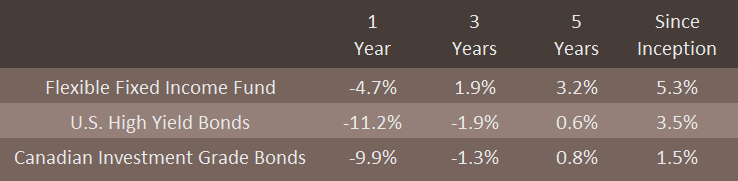
Ewing Morris Flexible Fixed Income Fund LP returns reflect Class P - Master Series, net of fees and expenses as of December 31, 2022. Inception date of the Fund is February 1, 2016. U.S. High Yield Bonds are represented by the iShares U.S. High Yield Bond Index ETF(CAD-Hedged). Canadian Investment Grade Bonds are represented by the iShares Canadian Corporate Bond Index ETF.
Everyone knows what happened in2022. Interest rates soared and many argue that we have crossed the Rubicon into a new geopolitical, economic and monetary regime. It was the worst year for bonds in a generation.
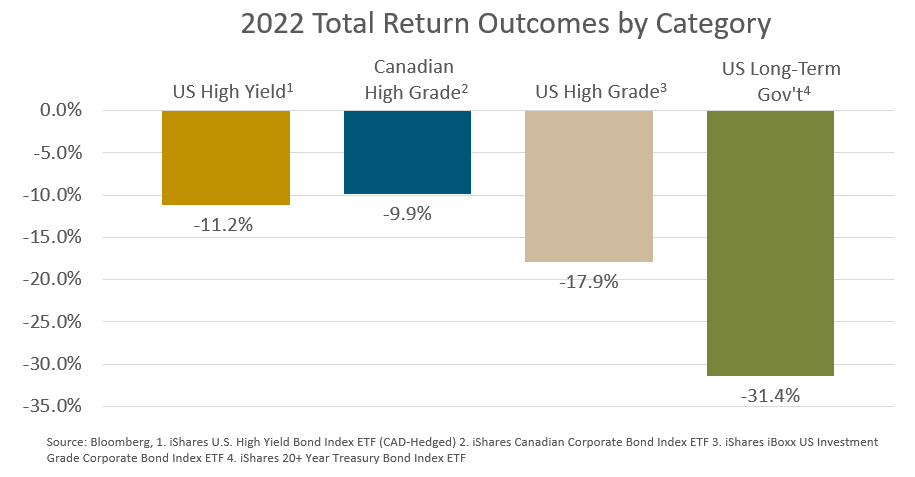
Having lost money in 2022, we cannot help but to be disappointed with the outcome in absolute terms. The counterbalance to this is the Fund outperformed its benchmark by 6.5 percentage points – the largest gap in the history of the fund. We can also put this relative performance in an absolute return context - since the inception of the high yield market index, 36 years ago, a 6.5 percentage point value-add would have been sufficient to produce a positive absolute return in any calendar year other than 2008. In a phrase, the year was “passable but insufficient.”
Performance: Puts and Takes
Performance detractors were, unsurprisingly, broad-based as even short-term risk-free bonds suffered in price1. However, the convertible bond sector is where the fund saw its largest individual losses. As we have found great promise in the convertible bond market in 2022, about 40% of fund capital is invested in this space. With a number of investments in this space, there were negative contributors. In one case, we misjudged management’s orientation toward creditors (Dye & Durham, which cost the fund 1.0%). In another case, we bought what we believe is an eventual par outcome at a purchase price in the low 70’s, only to see the convertible sink into the mid 50’s on tightness in funding markets and consumer concerns (Affirm, which cost the fund 1.2%). And, in another case the decline of a convertible bond that has immense long-term equity optionality to levels we believe are exceptionally cheap (Ziff Davis, which cost the fund 1.2%). In sum, positions in these three companies detracted 3.5 percentage points of return. And, when including Coinbase (which still sports zero net debt and bonds in the 50’s), the rake-stepping tally rises into the 5% range. Your Portfolio Manager will not offer any excuses for these negative outcomes.
The greatest positive single contributor to results in 2022 was a broad credit hedge we put in place in Q3 of 2021, which paid off in the first half of the year as rates shot up and high-grade credit markets weakened. In 2021, we identified the possibility that inflation may end up pressuring the credit market, which at the time carried prices that implied very little expectation of future inflation (or even economic weakness). Seeing this setup as a near “free” option to insulate the portfolio from stormy financial conditions, we shorted the (record expensive) credit risk of long-term corporate bonds on the view that inflation (and its consequent central bank tightening) would ultimately impact stock and credit prices. This hedge was executed on a diversified basis (largely through electronic ‘portfolio trades’) and was the greatest contributor to our preservation of capital from 2021 to mid 2022. In 2022, this position added 5.2 percentage points of return to the fund.
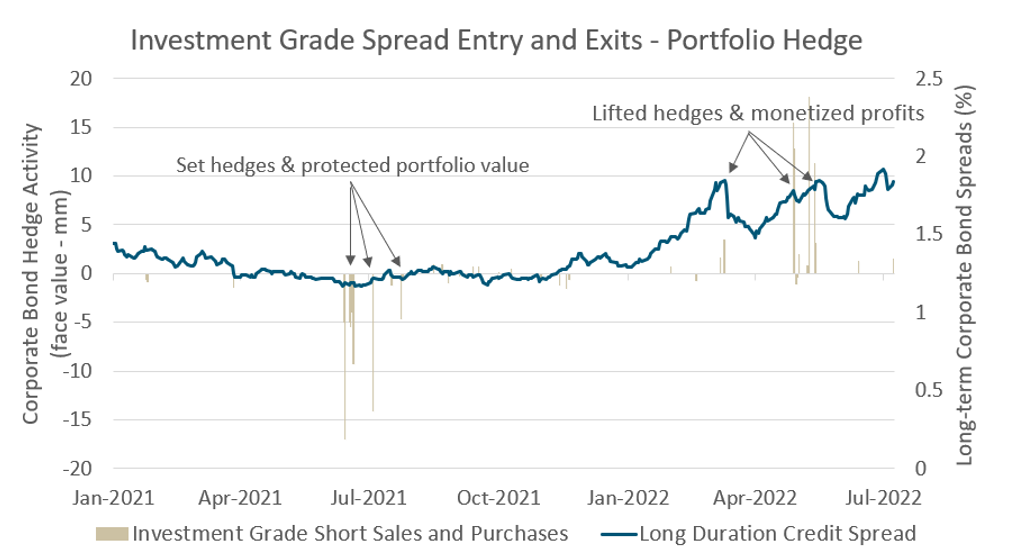
We also saw success in 2022 in our Structural Value investments. These are investments where the investment outcome is driven by features of the bond contract rather than by business performance or its management team’s credit stewardship.

Profitable investing requires asymmetry. Asymmetry in information and asymmetry in insight are conditions for potential asymmetry in investment outcome. We are seeing Structural Value positions tied to corporate events as an investment category that is among the most asymmetry-rich spaces that we can find in the market. For a variety of circumstances, companies from time-to-time consider corporate events such as reorganizations, mergers or sales, which can have profound implications on their bonds. The economic consequences to the bonds are driven by what’s contained in each bond contract. Recognizing and monetizing this type of opportunity requires integrating governance-based pattern recognition, real-world industrial logic and debt contract analysis. Without this analytical combination, a bond may appear like any other when - in substance - it is not.
Although the total profit pool of this investment category is substantial, the problem is that it requires decision makers to personally have (or have immediately available to them) this disparate combination of skillsets. Because of this challenge, this event-driven profit pool is not a focal point for large fixed income managers. The interesting question is “Why”? As a practical matter in a race to the bottom on fees, the average capital deployed per investment professional has ballooned over time, forcing fixed income asset manager research departments to focus only on the most readily accessible profit pools, being credit quality, duration and sector. Compounding this theme, large asset managers are increasingly managing their portfolios through electronic venues and more commonly using “portfolio trades”, targeting baskets of a specified credit quality, duration and sector. Under this approach, special situations in any specific bond in the basket does not matter as much to a decision maker as the characteristic and pricing of the basket that is being traded.
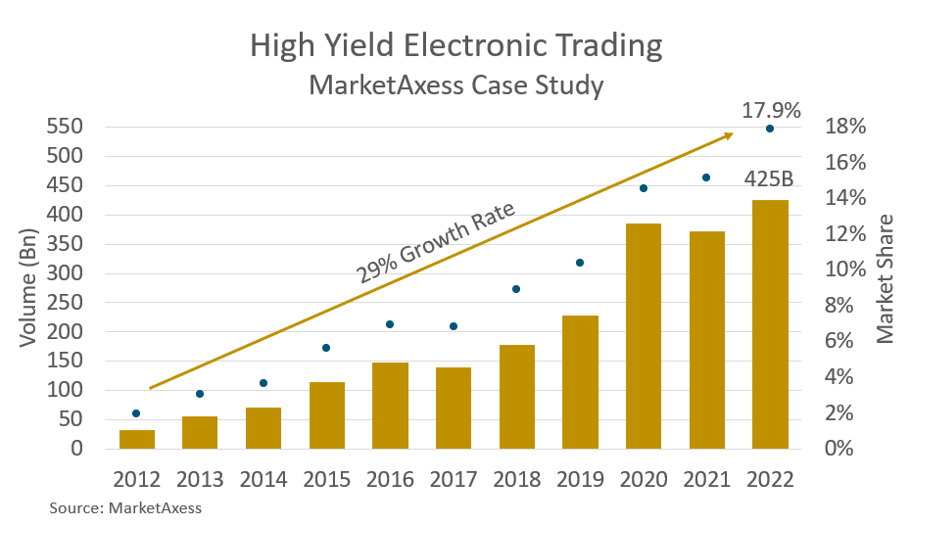
This dynamic opens the opportunity for asymmetric engagement in markets of corporate debt securities. This became strikingly apparent to us in certain situations we monetized in 2021, the Shaw Communication Preferred Shares2 being the standout example of this. We dedicated significant resources to this area in 2022 due to its profitability and continued promise in a fixed income landscape that is becoming more quantitatively driven.
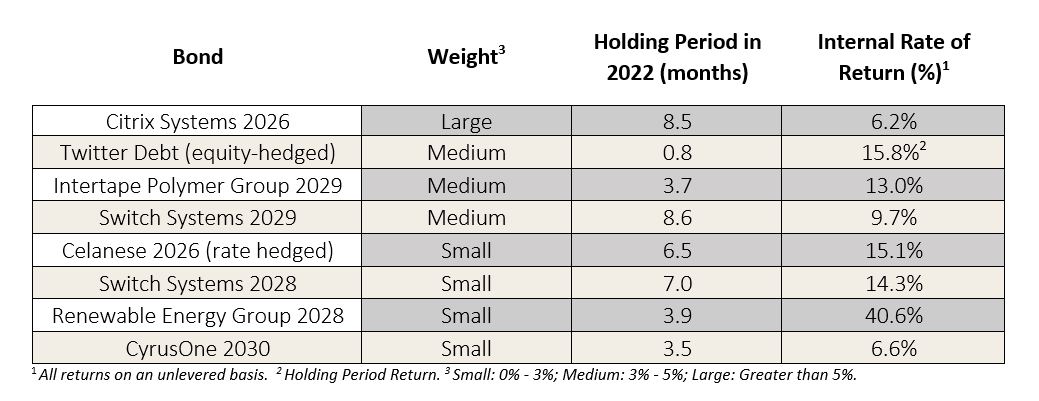
Bond trading has clearly turned more electronic (as opposed to in Bloomberg chat or over the phone). We have noticed a marked increase in the prevalence of automated pricing and algorithm-driven counterparties on electronic trading venues. These players often trade based on descriptive statistics and relative value of a bond. If this is the case, this trend may actually deepen this event-driven profit pool in the future. We look forward to finding out.
The Current Situation
For the first time in more than a decade, we are seeing a sustained and strikingly wide range in pricing in the bond market. One needs to look no further than some bonds of Google, which trade at 60 cents on the dollar to find proof of this3. It’s not lost upon us that swathes of high yield and high-grade bonds are now trading at “recovery value” prices, despite good credit quality. Due to the swift move higher in yields, the current situation is one that we have scarcely seen in the history of corporate bond markets. As the below figure shows, the overwhelming majority of bonds in 2021 were found in the 100-110 price range. Today the most common bond prices start with an ‘8’ or a ‘9’. There are also more bonds priced below 80 than there are bonds priced above par (100). Up until 2022, the bond market was a fairly simple offering - chocolate or vanilla. Today, the market is a veritable Baskin Robbins and we are active, scoop and waffle cones in hand.
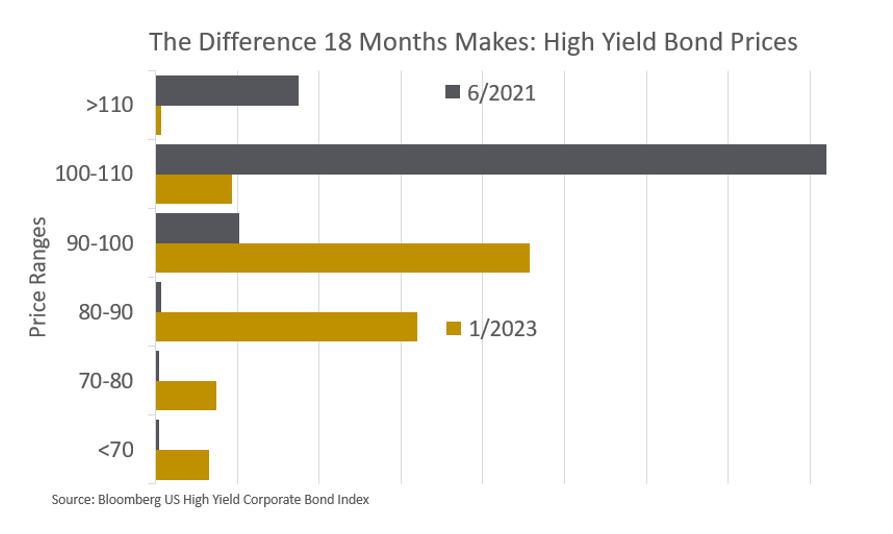
A Note on Our Fixed Income Investment Operation
In a year like 2022, it is easy to become captive to market moves and macro narratives, which threaten to distract us from keeping the main thing the main thing. To guard against getting carried away by these dynamics, we remind ourselves of the essence of our task at hand. This reminder may be also helpful to you. In its most simple form, our operation buys claims on North American business. We exchange capital today for well-defined promises of the repayment of more capital tomorrow. These promises are debt contracts backed by North American business. Importantly, the promises that we buy do not require the financial success of a business. These promises simply require a lack of failure. The debt contracts of these businesses trade in the market at prices that the market sets on any given day. Importantly, prices for individual debt contracts occasionally become divorced from their true value. This “dislocation” tends to be driven by inaccurate assessments of the business’ resilience, people running or governing the business or the contractual features of the debt itself. Sometimes dislocations are even more simple, when the owners of the debt contracts see what everyone else sees, but nonetheless have to sell the debt anyway. Regardless of circumstance, it is our job to accurately identify truly dislocated situations and make informed purchases and sales based on our investment insight. Your financial success with us will be defined by the accuracy of our decisions. If the cumulative accuracy of our decisions is superior, results will exceed our fixed income benchmarks over the long-term. It should be noted that it is possible for performance track records to deviate from underlying skill. However, as time passes, Bill Parcells’s4 message on track record becomes indisputable: “You are what your record says you are.”
Outlook
As of this writing, the high yield default cycle has yet to truly arrive. Many observers are calling for rough performance in the asset class on account of their view that the additional yield high yield bonds offer over risk free government bonds (known as the credit spread) is insufficient. We very much appreciate this perspective and even after the strong start to the year (+3.4%)5 we wouldn’t be surprised to see the asset class down in moments in 2023, perhaps materially. However, in a circumstance such as this where high yield finds itself back near or into double digit yield territory (from it’s current 8% level), we would likely view this as an opportunity of a cycle. However, expecting or betting on that to happen is to discount the history of high yield performance. It is striking to note that high yield bonds have never seen consecutive down (calendar) years in its recorded history. As the opportunity set is strong and it is impossible to predict the zig-zags of the market, we remain fully invested and are ready to deploy capital with agility when situations and market circumstances justify.
Thank you for your investment in the Ewing Morris Flexible Fixed Income Fund.
1 Source: Bloomberg - sample short-term US Treasury Note (ie: T 1.5% due 11/2024) returned negative 5.5% in 2022.
2Average purchase price of $19.71 (post-announcement) versus redemption price of $25.00
3Source: Bloomberg - GOOGL 2.25% due 2060. These notes traded as low as 52 cents in 2022.
4Bill Parcells: the only NFL coach to lead four different franchises to the playoffs and three to a conference championship game. In four years, he lead the New York Giants - a team that when he joined had only one year with a winning record in their last ten - to win a Super Bowl championship.
5As of January 17, 2023

Schedule a
Conversation




Connect with Peers



Explore Our Full Library



Library







Minimizing Tax Drag (Part 2)