Fellow Limited Partners,
In 2025, the Flexible Fixed Income Fund returned 4.5%. This compares to returns of 6.3% and 4.4% for our publicly traded high-yield and investment grade benchmarks, respectively.
Since its inception in early 2016, the Fund has delivered a compound annual return of 5.9%, meeting our long-term return expectations of 5% to 7% and exceeding both of our benchmarks.
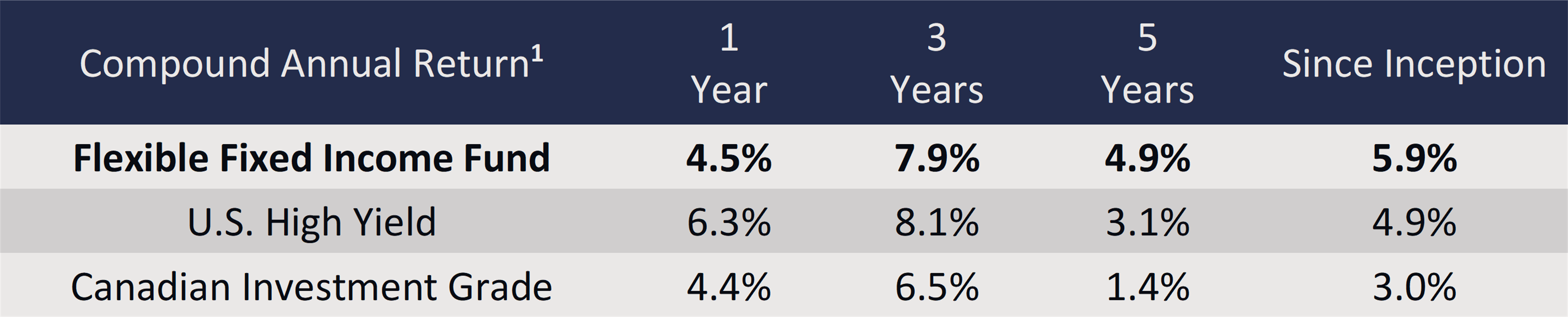
1. Ewing Morris Flexible Fixed Income Fund LP returns reflect Class P – Master Series, net of fees and expenses, as of December 31, 2025. The inception date of the Fund is February 1, 2016. U.S. high yield bonds are represented by the iShares U.S. High Yield Bond Index ETF (CAD-hedged). Canadian investment grade bonds are represented by the iShares Canadian Corporate Bond Index ETF. See Additional Disclosures. All market-based data is sourced from Bloomberg LP.
Performance
For countries, markets, and companies, every year has its own features and contours, and 2025 was no different. From a market perspective, one striking observation was just how homogeneous returns were across fixed income. From top-quality investment grade bonds to lower-quality high yield, realized returns generally fell within a narrow 2% range.
Looking at the Fund, our +4.5% absolute return in placed our performance in between that of our two benchmarks and somewhat shy of our stated goal of a tax-efficient 5% to 7% net return.
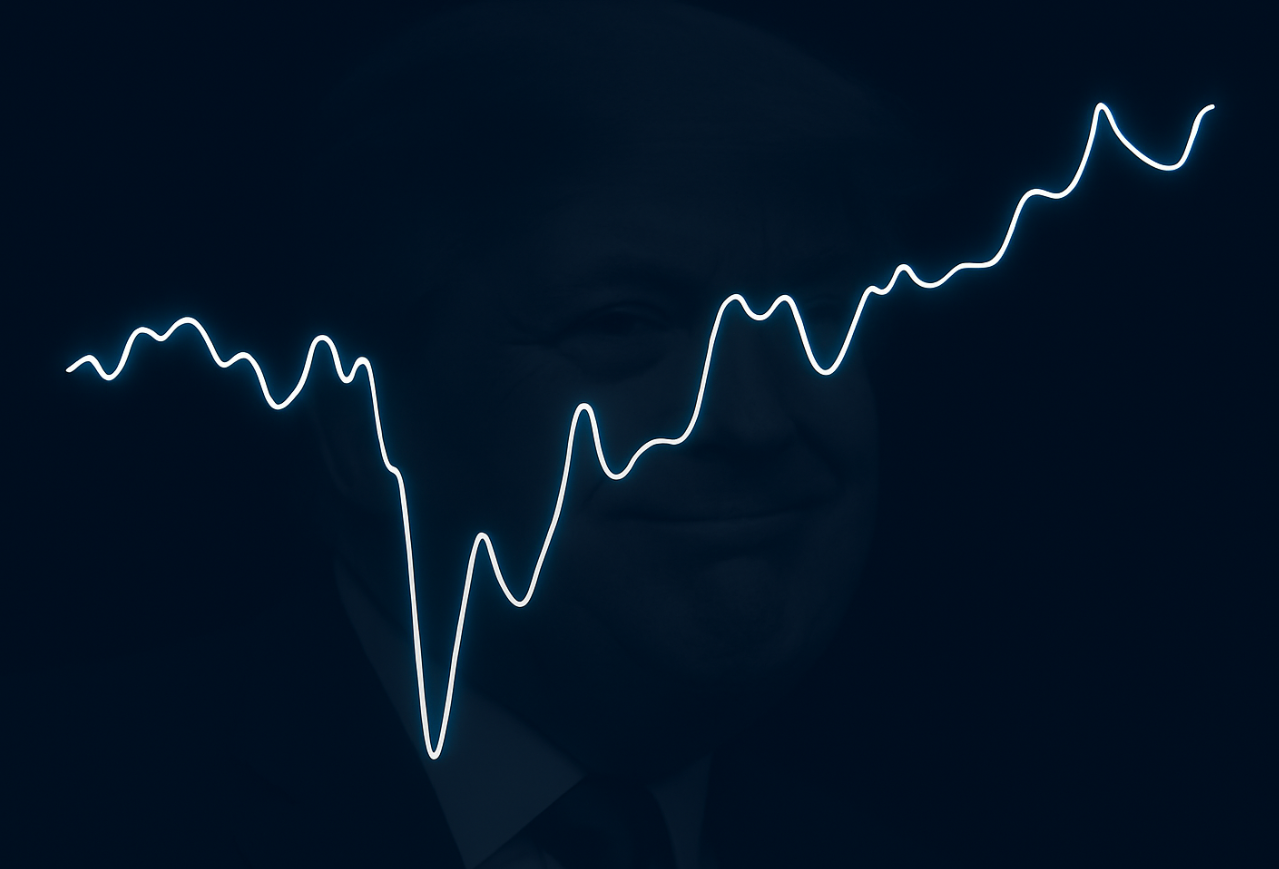
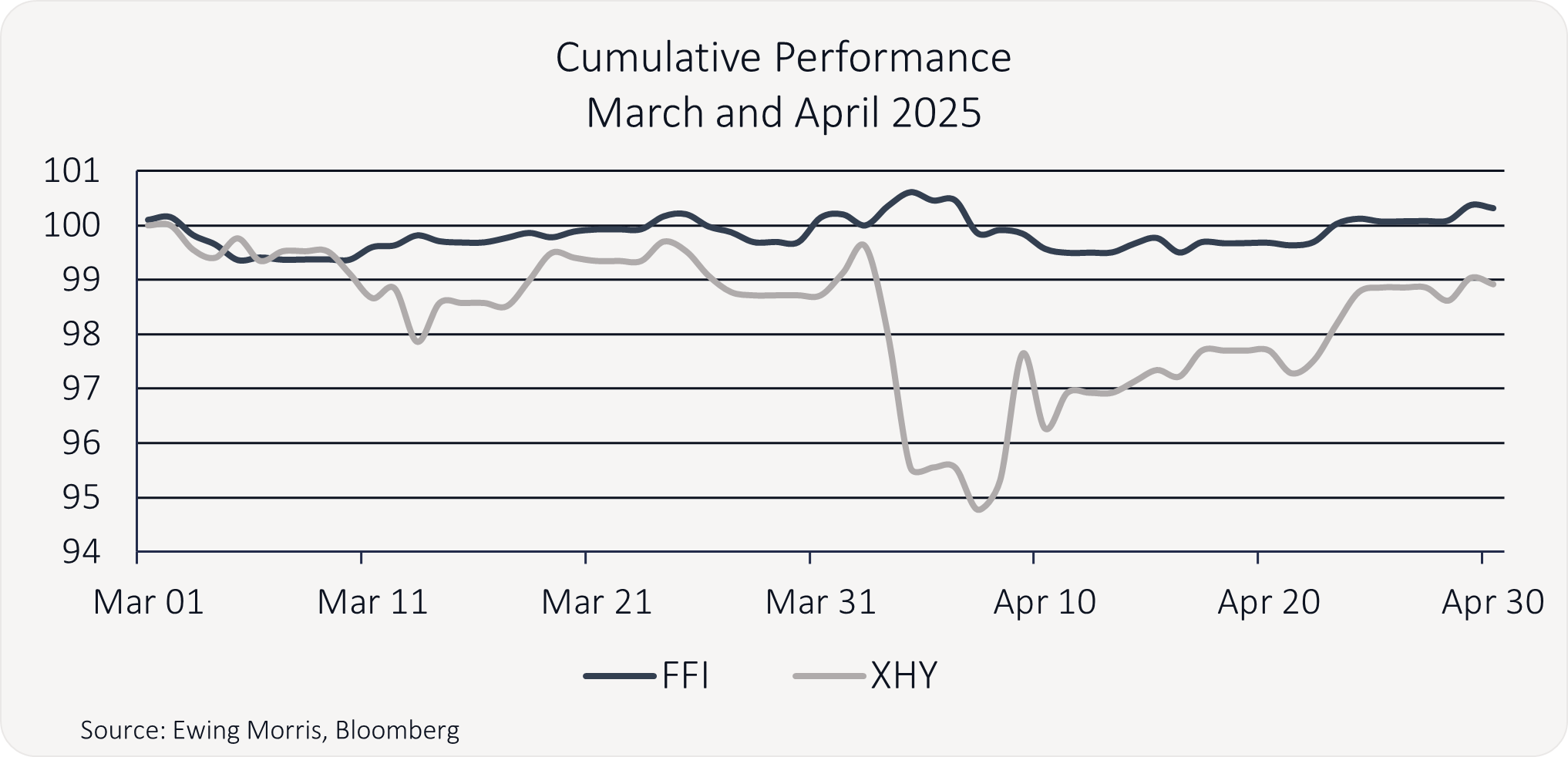
While we would highlight the Fund's smooth experience through the Trump tariff volatility (as shown below), the final measure is the one that counts - and we view 2025's performance as unsatisfying in the broader context.
In hindsight, our assets performed largely as expected in 2025. Our underperformance relative to high yield was primarily driven by two factors: first, our deliberate decision to maintain portfolio insurance through a hedge in investment grade credit spreads; and second, an interruption to M&A activity in the first half of the year, which resulted in less event-driven upside than anticipated.
Heading into 2026, the portfolio remains fully invested from a long perspective, with a continued focus on identifying underpriced optionality in individual bond situations. On the defensive side, we are maintaining our investment grade credit spread hedge.
The Contours of 2025
The Trump Tariff Tantrum
In April, the high-yield market sold off sharply following Trump’s stunning opening salvo in global trade negotiations. This was a time when our portfolio risk management shone. Although the market rebounded and ended the month up, we were very pleased with the portfolio’s performance during this tumultuous period and share our intra-month performance with you, which used Bloomberg market pricing. The outperformance in these market down-months was consistent with both our portfolio positioning and our historical performance since inception.
Bringing It Home
Our longstanding approach in the Fund has been to steer clear of taking currency bets. To this end, we have hedged the foreign currency exposure of the portfolio since its inception. However, as the Bank of Canada continued to cut rates lower than the Federal Reserve, the short-term interest rate differential between Canada and the US widened. This meant it cost more to hedge US dollars back to Canadian dollars. In response to this dynamic, we divested many US dollar–based investments, redeploying the capital into a much more attractive Canadian dollar high-yield bond market. Higher-quality credits such as Boyd Group and issuers backed by Fairfax Financial were favorable opportunities in which we participated.

Saying Goodbye to Some Convertibles
As we brought capital back into Canada, we exited many US convertible bonds. After our initial purchases in dislocated markets in 2022 and 2023, the majority of these bonds had evolved into mostly low-risk cash substitutes, as expected. As many of these bonds were fully priced, they became ideal sale candidates for a rotation back into Canada. Despite this rotation, we remain heavily invested in select US convertible bonds for their upside optionality and excellent after-tax return profiles due to their low coupons.

The Power of People
As our study of shareholder engagement and corporate governance deepens, it has become clear to us that companies do not just exist “out there” as operating assets and a collection of contracts. An alternative perspective is that companies can be thought of as deeply social organizations engaged in commercial decision making. And, like any social organization, decision-making authority tends to follow a power-law distribution rather than being evenly spread across the organization, especially in today’s professional director milieu. This fact of life should be exceptionally central to credit investors, because decisions made by one or a few people can alter the trajectory of a credit far more than the gradual movement of the underlying business. This makes the task of determining who these players are and what they want foundational to understanding many credits. It is through the decision making of a few that balance sheets can strengthen, weaken, or transform entirely. On this theme, three examples from the year come to mind.
Larry Ellison - Oracle
Going into 2024, the Fund’s second largest credit short position was in the long bonds of Oracle. These bonds fit well within our long-dated investment grade credit spread hedge basket, as Oracle had long demonstrated credit-unfriendly behavior, including tens of billions of dollars of share buybacks over time and an approximately five billion dollar annual dividend. Another attractive feature of Oracle was low transaction costs, given that the company is among the most liquid long-dated issuers in the U.S. investment grade market.
Oracle is unusual in that it is, in large part, controlled by one person: Larry Ellison. Larry is the founder, Chief Technology Officer, and Executive Chair, and he owns 40% of Oracle. This means that what happens to the balance sheet is essentially up to Larry Ellison. In 2025, Larry stepped on the gas, leveraging the company’s balance sheet in pursuit of competitiveness in the AI data center space. At the same time, through his son David, Larry also funded a substantial merger between Skydance and Paramount, with a combined enterprise value of approximately $28Bn, and engaged in a greater than $100Bn bidding war with Netflix over Warner Bros. Discovery.
It is therefore no surprise that Oracle’s credit spreads widened materially in 2025. From the beginning of the year to the time of this writing, Oracle’s 2054 bonds lost approximately 12% in price relative to their benchmark Treasury. A 12% relative price gain versus an approximately 1.2% annual credit spread hedging cost illustrates the asymmetry of the “portfolio insurance” we maintain. With most investment grade credit spreads at or near their lows at other issuers, our portfolio’s hedge has strong prospects of delivering profits in periods of market adversity, should such an environment emerge.
Electronic Arts
A great example of the machinations of social dynamics was found in Electronic Arts (EA). Although we did not own the company’s 2051 bonds, it is a credit case study for the ages that we highlighted on X, which garnered more than 100,000 views. The precise catalyst for the deal is difficult to know from the outside, but a strong argument could be made that the Trump administration’s receptive posture toward the Middle East, combined with newly well-positioned relationships, including Jared Kushner, made a deal possible that may have been impossible for many years. Through the influence and agency of a small number of dynamic individuals, a long-dormant outcome became achievable.
While this deal underlined what is possible through the power of a few people and deep public and private credit markets, it also showed the investment grade corporate bond market something significant. EA’s investment grade–rated bonds due in 2051 traded up from approximately 65 and are now closing in on what appears likely to be 101. This represents roughly a 55 percent price gain on an investment grade–rated bond.
This would also be one of the few times we have seen the prospective takeover premium of the bonds exceed, by more than two times, that of the equity. With this anomalous upside optionality laid bare, we pounced on other safe, long-duration credits that carry similar optionality. Given that there are swathes of investment grade bonds issued in 2021 that now trade at significant discounts, we do not believe that this EA outcome will be an isolated event.
Shawn Sedaghat – TriMas Corporation
TriMas is an industrial conglomerate that had experienced some brushes with activism but had largely been a self-governing company. That changed when a private investor, Shawn Sedaghat, acquired 10% of the company’s stock and joined its board. This was a case in which a single individual appeared to catalyze not only a change in management, but also the sale of the majority of the company’s assets and the creation of a Strategic Investment Committee, all within a year and a half—a truly remarkable achievement.
This case was also instructive because it demonstrated that credit markets often do not respond properly to situations involving shifting balances of power, situations we have experience identifying. In the case of TriMas, after Mr. Sedaghat filed his initial ownership disclosure via a Form 13-D, we took an interest in the situation and began evaluating the various paths the company could take. Several months later, TriMas announced that its CEO would be stepping down. This was a threshold signal to us that meaningful change was possible and that there was now underappreciated upside potential in the bonds. We were among the first in the market to take a meaningful position in the company’s bonds at 91.5 following the leadership news. Fast forward to today, and we are now evaluating a potential asset disposition at par, with the bonds currently trading in the upper 97 range.
Outlook
Although our resources are primarily focused on the micro, the macro cannot be ignored. Across the world, 2025 featured seismic political, regulatory, and technological shifts. Bonds were comfortably positive, equities were up, and credit spreads tightened over the year. Taken together, this would suggest a broad perception of safety in the market. Yet gold and silver have been moving parabolically higher. These two facts stand largely in opposition to one another.
In addition, certain pockets of private capital, from private credit to private equity and real estate, have been facing genuine adversity. In Canada, despite a meaningful reduction in short-term interest rates, more than $30Bn of real estate funds have gated, and we are looking ahead to what could be a challenging renegotiation of USMCA. These macro headlines all underline the value of the micro and the necessity of “picking your spots.”
2026 may be one of the most dynamic years of the 21st century, and in building our portfolio we have embraced the necessity of hand-picking our bonds. We also recognize that downside valuation risks are abundant. With our substantial hedge in investment grade credit, we have positioned the portfolio so that we do not need to predict.
Thank you for your partnership in the Ewing Morris Flexible Fixed Income Fund LP.
The inception date of the Flexible Fixed Income Fund is February 1, 2016. Flexible Fixed Income Fund returns reflect Class P – Master Series, net of fees and expenses. We have listed the iShares U.S. High Yield Bond Index ETF (CAD-hedged) and the iShares Canadian Corporate Bond Index ETF as benchmark indices and data for the high-yield and corporate bond markets, as these are widely known and commonly used benchmarks for fixed income markets. The Fund has a flexible investment mandate, and accordingly these benchmark indices are provided for informational purposes only. Comparisons to these benchmarks and indices have limitations.
Investing in fixed income securities is the primary strategy for the Fund; however, the Fund does not invest in all, or necessarily any, of the securities that comprise the referenced benchmark indices. The Fund’s portfolio may contain, among other things, options, short positions, other securities, concentrated positions, and may employ leverage that is not reflected in these indices. As a result, no market indices are directly comparable to the results of the Fund.
Past performance does not guarantee future returns. This letter does not constitute an offer to sell units of any Ewing Morris Fund, collectively referred to as “Ewing Morris Funds.” Units of Ewing Morris Funds are only available to investors who meet applicable investor suitability and sophistication requirements. While the information prepared in this report is believed to be accurate, Ewing Morris & Co. Investment Partners Ltd. makes no representation or warranty as to its completeness or accuracy and accepts no responsibility for any errors contained herein. This report is not intended for public use or distribution.
There can be no guarantee that any projection, forecast, or opinion will be realized. All information provided is for informational purposes only and should not be construed as personal investment advice. Users of these materials are advised to conduct their own analysis prior to making any investment decision. Sources for data referenced and benchmark information include Bloomberg and Ewing Morris. As of December 31, 2025.
Fellow Limited Partners,
In 2025, the Flexible Fixed Income Fund returned 4.5%. This compares to returns of 6.3% and 4.4% for our publicly traded high-yield and investment grade benchmarks, respectively.
Since its inception in early 2016, the Fund has delivered a compound annual return of 5.9%, meeting our long-term return expectations of 5% to 7% and exceeding both of our benchmarks.
1. Ewing Morris Flexible Fixed Income Fund LP returns reflect Class P – Master Series, net of fees and expenses, as of December 31, 2025. The inception date of the Fund is February 1, 2016. U.S. high yield bonds are represented by the iShares U.S. High Yield Bond Index ETF (CAD-hedged). Canadian investment grade bonds are represented by the iShares Canadian Corporate Bond Index ETF. See Additional Disclosures. All market-based data is sourced from Bloomberg LP.
Performance
For countries, markets, and companies, every year has its own features and contours, and 2025 was no different. From a market perspective, one striking observation was just how homogeneous returns were across fixed income. From top-quality investment grade bonds to lower-quality high yield, realized returns generally fell within a narrow 2% range.
Looking at the Fund, our +4.5% absolute return in placed our performance in between that of our two benchmarks and somewhat shy of our stated goal of a tax-efficient 5% to 7% net return.
While we would highlight the Fund's smooth experience through the Trump tariff volatility (as shown below), the final measure is the one that counts - and we view 2025's performance as unsatisfying in the broader context.
In hindsight, our assets performed largely as expected in 2025. Our underperformance relative to high yield was primarily driven by two factors: first, our deliberate decision to maintain portfolio insurance through a hedge in investment grade credit spreads; and second, an interruption to M&A activity in the first half of the year, which resulted in less event-driven upside than anticipated.
Heading into 2026, the portfolio remains fully invested from a long perspective, with a continued focus on identifying underpriced optionality in individual bond situations. On the defensive side, we are maintaining our investment grade credit spread hedge.
The Contours of 2025
The Trump Tariff Tantrum
In April, the high-yield market sold off sharply following Trump’s stunning opening salvo in global trade negotiations. This was a time when our portfolio risk management shone. Although the market rebounded and ended the month up, we were very pleased with the portfolio’s performance during this tumultuous period and share our intra-month performance with you, which used Bloomberg market pricing. The outperformance in these market down-months was consistent with both our portfolio positioning and our historical performance since inception.
Bringing It Home
Our longstanding approach in the Fund has been to steer clear of taking currency bets. To this end, we have hedged the foreign currency exposure of the portfolio since its inception. However, as the Bank of Canada continued to cut rates lower than the Federal Reserve, the short-term interest rate differential between Canada and the US widened. This meant it cost more to hedge US dollars back to Canadian dollars. In response to this dynamic, we divested many US dollar–based investments, redeploying the capital into a much more attractive Canadian dollar high-yield bond market. Higher-quality credits such as Boyd Group and issuers backed by Fairfax Financial were favorable opportunities in which we participated.
Saying Goodbye to Some Convertibles
As we brought capital back into Canada, we exited many US convertible bonds. After our initial purchases in dislocated markets in 2022 and 2023, the majority of these bonds had evolved into mostly low-risk cash substitutes, as expected. As many of these bonds were fully priced, they became ideal sale candidates for a rotation back into Canada. Despite this rotation, we remain heavily invested in select US convertible bonds for their upside optionality and excellent after-tax return profiles due to their low coupons.
The Power of People
As our study of shareholder engagement and corporate governance deepens, it has become clear to us that companies do not just exist “out there” as operating assets and a collection of contracts. An alternative perspective is that companies can be thought of as deeply social organizations engaged in commercial decision making. And, like any social organization, decision-making authority tends to follow a power-law distribution rather than being evenly spread across the organization, especially in today’s professional director milieu. This fact of life should be exceptionally central to credit investors, because decisions made by one or a few people can alter the trajectory of a credit far more than the gradual movement of the underlying business. This makes the task of determining who these players are and what they want foundational to understanding many credits. It is through the decision making of a few that balance sheets can strengthen, weaken, or transform entirely. On this theme, three examples from the year come to mind.
Larry Ellison - Oracle
Going into 2024, the Fund’s second largest credit short position was in the long bonds of Oracle. These bonds fit well within our long-dated investment grade credit spread hedge basket, as Oracle had long demonstrated credit-unfriendly behavior, including tens of billions of dollars of share buybacks over time and an approximately five billion dollar annual dividend. Another attractive feature of Oracle was low transaction costs, given that the company is among the most liquid long-dated issuers in the U.S. investment grade market.
Oracle is unusual in that it is, in large part, controlled by one person: Larry Ellison. Larry is the founder, Chief Technology Officer, and Executive Chair, and he owns 40% of Oracle. This means that what happens to the balance sheet is essentially up to Larry Ellison. In 2025, Larry stepped on the gas, leveraging the company’s balance sheet in pursuit of competitiveness in the AI data center space. At the same time, through his son David, Larry also funded a substantial merger between Skydance and Paramount, with a combined enterprise value of approximately $28Bn, and engaged in a greater than $100Bn bidding war with Netflix over Warner Bros. Discovery.
It is therefore no surprise that Oracle’s credit spreads widened materially in 2025. From the beginning of the year to the time of this writing, Oracle’s 2054 bonds lost approximately 12% in price relative to their benchmark Treasury. A 12% relative price gain versus an approximately 1.2% annual credit spread hedging cost illustrates the asymmetry of the “portfolio insurance” we maintain. With most investment grade credit spreads at or near their lows at other issuers, our portfolio’s hedge has strong prospects of delivering profits in periods of market adversity, should such an environment emerge.
Electronic Arts
A great example of the machinations of social dynamics was found in Electronic Arts (EA). Although we did not own the company’s 2051 bonds, it is a credit case study for the ages that we highlighted on X, which garnered more than 100,000 views. The precise catalyst for the deal is difficult to know from the outside, but a strong argument could be made that the Trump administration’s receptive posture toward the Middle East, combined with newly well-positioned relationships, including Jared Kushner, made a deal possible that may have been impossible for many years. Through the influence and agency of a small number of dynamic individuals, a long-dormant outcome became achievable.
While this deal underlined what is possible through the power of a few people and deep public and private credit markets, it also showed the investment grade corporate bond market something significant. EA’s investment grade–rated bonds due in 2051 traded up from approximately 65 and are now closing in on what appears likely to be 101. This represents roughly a 55 percent price gain on an investment grade–rated bond.
This would also be one of the few times we have seen the prospective takeover premium of the bonds exceed, by more than two times, that of the equity. With this anomalous upside optionality laid bare, we pounced on other safe, long-duration credits that carry similar optionality. Given that there are swathes of investment grade bonds issued in 2021 that now trade at significant discounts, we do not believe that this EA outcome will be an isolated event.
Shawn Sedaghat – TriMas Corporation
TriMas is an industrial conglomerate that had experienced some brushes with activism but had largely been a self-governing company. That changed when a private investor, Shawn Sedaghat, acquired 10% of the company’s stock and joined its board. This was a case in which a single individual appeared to catalyze not only a change in management, but also the sale of the majority of the company’s assets and the creation of a Strategic Investment Committee, all within a year and a half—a truly remarkable achievement.
This case was also instructive because it demonstrated that credit markets often do not respond properly to situations involving shifting balances of power, situations we have experience identifying. In the case of TriMas, after Mr. Sedaghat filed his initial ownership disclosure via a Form 13-D, we took an interest in the situation and began evaluating the various paths the company could take. Several months later, TriMas announced that its CEO would be stepping down. This was a threshold signal to us that meaningful change was possible and that there was now underappreciated upside potential in the bonds. We were among the first in the market to take a meaningful position in the company’s bonds at 91.5 following the leadership news. Fast forward to today, and we are now evaluating a potential asset disposition at par, with the bonds currently trading in the upper 97 range.
Outlook
Although our resources are primarily focused on the micro, the macro cannot be ignored. Across the world, 2025 featured seismic political, regulatory, and technological shifts. Bonds were comfortably positive, equities were up, and credit spreads tightened over the year. Taken together, this would suggest a broad perception of safety in the market. Yet gold and silver have been moving parabolically higher. These two facts stand largely in opposition to one another.
In addition, certain pockets of private capital, from private credit to private equity and real estate, have been facing genuine adversity. In Canada, despite a meaningful reduction in short-term interest rates, more than $30Bn of real estate funds have gated, and we are looking ahead to what could be a challenging renegotiation of USMCA. These macro headlines all underline the value of the micro and the necessity of “picking your spots.”
2026 may be one of the most dynamic years of the 21st century, and in building our portfolio we have embraced the necessity of hand-picking our bonds. We also recognize that downside valuation risks are abundant. With our substantial hedge in investment grade credit, we have positioned the portfolio so that we do not need to predict.
Thank you for your partnership in the Ewing Morris Flexible Fixed Income Fund LP.
The inception date of the Flexible Fixed Income Fund is February 1, 2016. Flexible Fixed Income Fund returns reflect Class P – Master Series, net of fees and expenses. We have listed the iShares U.S. High Yield Bond Index ETF (CAD-hedged) and the iShares Canadian Corporate Bond Index ETF as benchmark indices and data for the high-yield and corporate bond markets, as these are widely known and commonly used benchmarks for fixed income markets. The Fund has a flexible investment mandate, and accordingly these benchmark indices are provided for informational purposes only. Comparisons to these benchmarks and indices have limitations.
Investing in fixed income securities is the primary strategy for the Fund; however, the Fund does not invest in all, or necessarily any, of the securities that comprise the referenced benchmark indices. The Fund’s portfolio may contain, among other things, options, short positions, other securities, concentrated positions, and may employ leverage that is not reflected in these indices. As a result, no market indices are directly comparable to the results of the Fund.
Past performance does not guarantee future returns. This letter does not constitute an offer to sell units of any Ewing Morris Fund, collectively referred to as “Ewing Morris Funds.” Units of Ewing Morris Funds are only available to investors who meet applicable investor suitability and sophistication requirements. While the information prepared in this report is believed to be accurate, Ewing Morris & Co. Investment Partners Ltd. makes no representation or warranty as to its completeness or accuracy and accepts no responsibility for any errors contained herein. This report is not intended for public use or distribution.
There can be no guarantee that any projection, forecast, or opinion will be realized. All information provided is for informational purposes only and should not be construed as personal investment advice. Users of these materials are advised to conduct their own analysis prior to making any investment decision. Sources for data referenced and benchmark information include Bloomberg and Ewing Morris. As of December 31, 2025.
Fellow Limited Partners,
In 2025, the Flexible Fixed Income Fund returned 4.5%. This compares to returns of 6.3% and 4.4% for our publicly traded high-yield and investment grade benchmarks, respectively.
Since its inception in early 2016, the Fund has delivered a compound annual return of 5.9%, meeting our long-term return expectations of 5% to 7% and exceeding both of our benchmarks.
1. Ewing Morris Flexible Fixed Income Fund LP returns reflect Class P – Master Series, net of fees and expenses, as of December 31, 2025. The inception date of the Fund is February 1, 2016. U.S. high yield bonds are represented by the iShares U.S. High Yield Bond Index ETF (CAD-hedged). Canadian investment grade bonds are represented by the iShares Canadian Corporate Bond Index ETF. See Additional Disclosures. All market-based data is sourced from Bloomberg LP.
Performance
For countries, markets, and companies, every year has its own features and contours, and 2025 was no different. From a market perspective, one striking observation was just how homogeneous returns were across fixed income. From top-quality investment grade bonds to lower-quality high yield, realized returns generally fell within a narrow 2% range.
Looking at the Fund, our +4.5% absolute return in placed our performance in between that of our two benchmarks and somewhat shy of our stated goal of a tax-efficient 5% to 7% net return.
While we would highlight the Fund's smooth experience through the Trump tariff volatility (as shown below), the final measure is the one that counts - and we view 2025's performance as unsatisfying in the broader context.
In hindsight, our assets performed largely as expected in 2025. Our underperformance relative to high yield was primarily driven by two factors: first, our deliberate decision to maintain portfolio insurance through a hedge in investment grade credit spreads; and second, an interruption to M&A activity in the first half of the year, which resulted in less event-driven upside than anticipated.
Heading into 2026, the portfolio remains fully invested from a long perspective, with a continued focus on identifying underpriced optionality in individual bond situations. On the defensive side, we are maintaining our investment grade credit spread hedge.
The Contours of 2025
The Trump Tariff Tantrum
In April, the high-yield market sold off sharply following Trump’s stunning opening salvo in global trade negotiations. This was a time when our portfolio risk management shone. Although the market rebounded and ended the month up, we were very pleased with the portfolio’s performance during this tumultuous period and share our intra-month performance with you, which used Bloomberg market pricing. The outperformance in these market down-months was consistent with both our portfolio positioning and our historical performance since inception.
Bringing It Home
Our longstanding approach in the Fund has been to steer clear of taking currency bets. To this end, we have hedged the foreign currency exposure of the portfolio since its inception. However, as the Bank of Canada continued to cut rates lower than the Federal Reserve, the short-term interest rate differential between Canada and the US widened. This meant it cost more to hedge US dollars back to Canadian dollars. In response to this dynamic, we divested many US dollar–based investments, redeploying the capital into a much more attractive Canadian dollar high-yield bond market. Higher-quality credits such as Boyd Group and issuers backed by Fairfax Financial were favorable opportunities in which we participated.
Saying Goodbye to Some Convertibles
As we brought capital back into Canada, we exited many US convertible bonds. After our initial purchases in dislocated markets in 2022 and 2023, the majority of these bonds had evolved into mostly low-risk cash substitutes, as expected. As many of these bonds were fully priced, they became ideal sale candidates for a rotation back into Canada. Despite this rotation, we remain heavily invested in select US convertible bonds for their upside optionality and excellent after-tax return profiles due to their low coupons.
The Power of People
As our study of shareholder engagement and corporate governance deepens, it has become clear to us that companies do not just exist “out there” as operating assets and a collection of contracts. An alternative perspective is that companies can be thought of as deeply social organizations engaged in commercial decision making. And, like any social organization, decision-making authority tends to follow a power-law distribution rather than being evenly spread across the organization, especially in today’s professional director milieu. This fact of life should be exceptionally central to credit investors, because decisions made by one or a few people can alter the trajectory of a credit far more than the gradual movement of the underlying business. This makes the task of determining who these players are and what they want foundational to understanding many credits. It is through the decision making of a few that balance sheets can strengthen, weaken, or transform entirely. On this theme, three examples from the year come to mind.
Larry Ellison - Oracle
Going into 2024, the Fund’s second largest credit short position was in the long bonds of Oracle. These bonds fit well within our long-dated investment grade credit spread hedge basket, as Oracle had long demonstrated credit-unfriendly behavior, including tens of billions of dollars of share buybacks over time and an approximately five billion dollar annual dividend. Another attractive feature of Oracle was low transaction costs, given that the company is among the most liquid long-dated issuers in the U.S. investment grade market.
Oracle is unusual in that it is, in large part, controlled by one person: Larry Ellison. Larry is the founder, Chief Technology Officer, and Executive Chair, and he owns 40% of Oracle. This means that what happens to the balance sheet is essentially up to Larry Ellison. In 2025, Larry stepped on the gas, leveraging the company’s balance sheet in pursuit of competitiveness in the AI data center space. At the same time, through his son David, Larry also funded a substantial merger between Skydance and Paramount, with a combined enterprise value of approximately $28Bn, and engaged in a greater than $100Bn bidding war with Netflix over Warner Bros. Discovery.
It is therefore no surprise that Oracle’s credit spreads widened materially in 2025. From the beginning of the year to the time of this writing, Oracle’s 2054 bonds lost approximately 12% in price relative to their benchmark Treasury. A 12% relative price gain versus an approximately 1.2% annual credit spread hedging cost illustrates the asymmetry of the “portfolio insurance” we maintain. With most investment grade credit spreads at or near their lows at other issuers, our portfolio’s hedge has strong prospects of delivering profits in periods of market adversity, should such an environment emerge.
Electronic Arts
A great example of the machinations of social dynamics was found in Electronic Arts (EA). Although we did not own the company’s 2051 bonds, it is a credit case study for the ages that we highlighted on X, which garnered more than 100,000 views. The precise catalyst for the deal is difficult to know from the outside, but a strong argument could be made that the Trump administration’s receptive posture toward the Middle East, combined with newly well-positioned relationships, including Jared Kushner, made a deal possible that may have been impossible for many years. Through the influence and agency of a small number of dynamic individuals, a long-dormant outcome became achievable.
While this deal underlined what is possible through the power of a few people and deep public and private credit markets, it also showed the investment grade corporate bond market something significant. EA’s investment grade–rated bonds due in 2051 traded up from approximately 65 and are now closing in on what appears likely to be 101. This represents roughly a 55 percent price gain on an investment grade–rated bond.
This would also be one of the few times we have seen the prospective takeover premium of the bonds exceed, by more than two times, that of the equity. With this anomalous upside optionality laid bare, we pounced on other safe, long-duration credits that carry similar optionality. Given that there are swathes of investment grade bonds issued in 2021 that now trade at significant discounts, we do not believe that this EA outcome will be an isolated event.
Shawn Sedaghat – TriMas Corporation
TriMas is an industrial conglomerate that had experienced some brushes with activism but had largely been a self-governing company. That changed when a private investor, Shawn Sedaghat, acquired 10% of the company’s stock and joined its board. This was a case in which a single individual appeared to catalyze not only a change in management, but also the sale of the majority of the company’s assets and the creation of a Strategic Investment Committee, all within a year and a half—a truly remarkable achievement.
This case was also instructive because it demonstrated that credit markets often do not respond properly to situations involving shifting balances of power, situations we have experience identifying. In the case of TriMas, after Mr. Sedaghat filed his initial ownership disclosure via a Form 13-D, we took an interest in the situation and began evaluating the various paths the company could take. Several months later, TriMas announced that its CEO would be stepping down. This was a threshold signal to us that meaningful change was possible and that there was now underappreciated upside potential in the bonds. We were among the first in the market to take a meaningful position in the company’s bonds at 91.5 following the leadership news. Fast forward to today, and we are now evaluating a potential asset disposition at par, with the bonds currently trading in the upper 97 range.
Outlook
Although our resources are primarily focused on the micro, the macro cannot be ignored. Across the world, 2025 featured seismic political, regulatory, and technological shifts. Bonds were comfortably positive, equities were up, and credit spreads tightened over the year. Taken together, this would suggest a broad perception of safety in the market. Yet gold and silver have been moving parabolically higher. These two facts stand largely in opposition to one another.
In addition, certain pockets of private capital, from private credit to private equity and real estate, have been facing genuine adversity. In Canada, despite a meaningful reduction in short-term interest rates, more than $30Bn of real estate funds have gated, and we are looking ahead to what could be a challenging renegotiation of USMCA. These macro headlines all underline the value of the micro and the necessity of “picking your spots.”
2026 may be one of the most dynamic years of the 21st century, and in building our portfolio we have embraced the necessity of hand-picking our bonds. We also recognize that downside valuation risks are abundant. With our substantial hedge in investment grade credit, we have positioned the portfolio so that we do not need to predict.
Thank you for your partnership in the Ewing Morris Flexible Fixed Income Fund LP.
The inception date of the Flexible Fixed Income Fund is February 1, 2016. Flexible Fixed Income Fund returns reflect Class P – Master Series, net of fees and expenses. We have listed the iShares U.S. High Yield Bond Index ETF (CAD-hedged) and the iShares Canadian Corporate Bond Index ETF as benchmark indices and data for the high-yield and corporate bond markets, as these are widely known and commonly used benchmarks for fixed income markets. The Fund has a flexible investment mandate, and accordingly these benchmark indices are provided for informational purposes only. Comparisons to these benchmarks and indices have limitations.
Investing in fixed income securities is the primary strategy for the Fund; however, the Fund does not invest in all, or necessarily any, of the securities that comprise the referenced benchmark indices. The Fund’s portfolio may contain, among other things, options, short positions, other securities, concentrated positions, and may employ leverage that is not reflected in these indices. As a result, no market indices are directly comparable to the results of the Fund.
Past performance does not guarantee future returns. This letter does not constitute an offer to sell units of any Ewing Morris Fund, collectively referred to as “Ewing Morris Funds.” Units of Ewing Morris Funds are only available to investors who meet applicable investor suitability and sophistication requirements. While the information prepared in this report is believed to be accurate, Ewing Morris & Co. Investment Partners Ltd. makes no representation or warranty as to its completeness or accuracy and accepts no responsibility for any errors contained herein. This report is not intended for public use or distribution.
There can be no guarantee that any projection, forecast, or opinion will be realized. All information provided is for informational purposes only and should not be construed as personal investment advice. Users of these materials are advised to conduct their own analysis prior to making any investment decision. Sources for data referenced and benchmark information include Bloomberg and Ewing Morris. As of December 31, 2025.
Fellow Limited Partners,
In 2025, the Flexible Fixed Income Fund returned 4.5%. This compares to returns of 6.3% and 4.4% for our publicly traded high-yield and investment grade benchmarks, respectively.
Since its inception in early 2016, the Fund has delivered a compound annual return of 5.9%, meeting our long-term return expectations of 5% to 7% and exceeding both of our benchmarks.
1. Ewing Morris Flexible Fixed Income Fund LP returns reflect Class P – Master Series, net of fees and expenses, as of December 31, 2025. The inception date of the Fund is February 1, 2016. U.S. high yield bonds are represented by the iShares U.S. High Yield Bond Index ETF (CAD-hedged). Canadian investment grade bonds are represented by the iShares Canadian Corporate Bond Index ETF. See Additional Disclosures. All market-based data is sourced from Bloomberg LP.
Performance
For countries, markets, and companies, every year has its own features and contours, and 2025 was no different. From a market perspective, one striking observation was just how homogeneous returns were across fixed income. From top-quality investment grade bonds to lower-quality high yield, realized returns generally fell within a narrow 2% range.
Looking at the Fund, our +4.5% absolute return in placed our performance in between that of our two benchmarks and somewhat shy of our stated goal of a tax-efficient 5% to 7% net return.
While we would highlight the Fund's smooth experience through the Trump tariff volatility (as shown below), the final measure is the one that counts - and we view 2025's performance as unsatisfying in the broader context.
In hindsight, our assets performed largely as expected in 2025. Our underperformance relative to high yield was primarily driven by two factors: first, our deliberate decision to maintain portfolio insurance through a hedge in investment grade credit spreads; and second, an interruption to M&A activity in the first half of the year, which resulted in less event-driven upside than anticipated.
Heading into 2026, the portfolio remains fully invested from a long perspective, with a continued focus on identifying underpriced optionality in individual bond situations. On the defensive side, we are maintaining our investment grade credit spread hedge.
The Contours of 2025
The Trump Tariff Tantrum
In April, the high-yield market sold off sharply following Trump’s stunning opening salvo in global trade negotiations. This was a time when our portfolio risk management shone. Although the market rebounded and ended the month up, we were very pleased with the portfolio’s performance during this tumultuous period and share our intra-month performance with you, which used Bloomberg market pricing. The outperformance in these market down-months was consistent with both our portfolio positioning and our historical performance since inception.
Bringing It Home
Our longstanding approach in the Fund has been to steer clear of taking currency bets. To this end, we have hedged the foreign currency exposure of the portfolio since its inception. However, as the Bank of Canada continued to cut rates lower than the Federal Reserve, the short-term interest rate differential between Canada and the US widened. This meant it cost more to hedge US dollars back to Canadian dollars. In response to this dynamic, we divested many US dollar–based investments, redeploying the capital into a much more attractive Canadian dollar high-yield bond market. Higher-quality credits such as Boyd Group and issuers backed by Fairfax Financial were favorable opportunities in which we participated.
Saying Goodbye to Some Convertibles
As we brought capital back into Canada, we exited many US convertible bonds. After our initial purchases in dislocated markets in 2022 and 2023, the majority of these bonds had evolved into mostly low-risk cash substitutes, as expected. As many of these bonds were fully priced, they became ideal sale candidates for a rotation back into Canada. Despite this rotation, we remain heavily invested in select US convertible bonds for their upside optionality and excellent after-tax return profiles due to their low coupons.
The Power of People
As our study of shareholder engagement and corporate governance deepens, it has become clear to us that companies do not just exist “out there” as operating assets and a collection of contracts. An alternative perspective is that companies can be thought of as deeply social organizations engaged in commercial decision making. And, like any social organization, decision-making authority tends to follow a power-law distribution rather than being evenly spread across the organization, especially in today’s professional director milieu. This fact of life should be exceptionally central to credit investors, because decisions made by one or a few people can alter the trajectory of a credit far more than the gradual movement of the underlying business. This makes the task of determining who these players are and what they want foundational to understanding many credits. It is through the decision making of a few that balance sheets can strengthen, weaken, or transform entirely. On this theme, three examples from the year come to mind.
Larry Ellison - Oracle
Going into 2024, the Fund’s second largest credit short position was in the long bonds of Oracle. These bonds fit well within our long-dated investment grade credit spread hedge basket, as Oracle had long demonstrated credit-unfriendly behavior, including tens of billions of dollars of share buybacks over time and an approximately five billion dollar annual dividend. Another attractive feature of Oracle was low transaction costs, given that the company is among the most liquid long-dated issuers in the U.S. investment grade market.
Oracle is unusual in that it is, in large part, controlled by one person: Larry Ellison. Larry is the founder, Chief Technology Officer, and Executive Chair, and he owns 40% of Oracle. This means that what happens to the balance sheet is essentially up to Larry Ellison. In 2025, Larry stepped on the gas, leveraging the company’s balance sheet in pursuit of competitiveness in the AI data center space. At the same time, through his son David, Larry also funded a substantial merger between Skydance and Paramount, with a combined enterprise value of approximately $28Bn, and engaged in a greater than $100Bn bidding war with Netflix over Warner Bros. Discovery.
It is therefore no surprise that Oracle’s credit spreads widened materially in 2025. From the beginning of the year to the time of this writing, Oracle’s 2054 bonds lost approximately 12% in price relative to their benchmark Treasury. A 12% relative price gain versus an approximately 1.2% annual credit spread hedging cost illustrates the asymmetry of the “portfolio insurance” we maintain. With most investment grade credit spreads at or near their lows at other issuers, our portfolio’s hedge has strong prospects of delivering profits in periods of market adversity, should such an environment emerge.
Electronic Arts
A great example of the machinations of social dynamics was found in Electronic Arts (EA). Although we did not own the company’s 2051 bonds, it is a credit case study for the ages that we highlighted on X, which garnered more than 100,000 views. The precise catalyst for the deal is difficult to know from the outside, but a strong argument could be made that the Trump administration’s receptive posture toward the Middle East, combined with newly well-positioned relationships, including Jared Kushner, made a deal possible that may have been impossible for many years. Through the influence and agency of a small number of dynamic individuals, a long-dormant outcome became achievable.
While this deal underlined what is possible through the power of a few people and deep public and private credit markets, it also showed the investment grade corporate bond market something significant. EA’s investment grade–rated bonds due in 2051 traded up from approximately 65 and are now closing in on what appears likely to be 101. This represents roughly a 55 percent price gain on an investment grade–rated bond.
This would also be one of the few times we have seen the prospective takeover premium of the bonds exceed, by more than two times, that of the equity. With this anomalous upside optionality laid bare, we pounced on other safe, long-duration credits that carry similar optionality. Given that there are swathes of investment grade bonds issued in 2021 that now trade at significant discounts, we do not believe that this EA outcome will be an isolated event.
Shawn Sedaghat – TriMas Corporation
TriMas is an industrial conglomerate that had experienced some brushes with activism but had largely been a self-governing company. That changed when a private investor, Shawn Sedaghat, acquired 10% of the company’s stock and joined its board. This was a case in which a single individual appeared to catalyze not only a change in management, but also the sale of the majority of the company’s assets and the creation of a Strategic Investment Committee, all within a year and a half—a truly remarkable achievement.
This case was also instructive because it demonstrated that credit markets often do not respond properly to situations involving shifting balances of power, situations we have experience identifying. In the case of TriMas, after Mr. Sedaghat filed his initial ownership disclosure via a Form 13-D, we took an interest in the situation and began evaluating the various paths the company could take. Several months later, TriMas announced that its CEO would be stepping down. This was a threshold signal to us that meaningful change was possible and that there was now underappreciated upside potential in the bonds. We were among the first in the market to take a meaningful position in the company’s bonds at 91.5 following the leadership news. Fast forward to today, and we are now evaluating a potential asset disposition at par, with the bonds currently trading in the upper 97 range.
Outlook
Although our resources are primarily focused on the micro, the macro cannot be ignored. Across the world, 2025 featured seismic political, regulatory, and technological shifts. Bonds were comfortably positive, equities were up, and credit spreads tightened over the year. Taken together, this would suggest a broad perception of safety in the market. Yet gold and silver have been moving parabolically higher. These two facts stand largely in opposition to one another.
In addition, certain pockets of private capital, from private credit to private equity and real estate, have been facing genuine adversity. In Canada, despite a meaningful reduction in short-term interest rates, more than $30Bn of real estate funds have gated, and we are looking ahead to what could be a challenging renegotiation of USMCA. These macro headlines all underline the value of the micro and the necessity of “picking your spots.”
2026 may be one of the most dynamic years of the 21st century, and in building our portfolio we have embraced the necessity of hand-picking our bonds. We also recognize that downside valuation risks are abundant. With our substantial hedge in investment grade credit, we have positioned the portfolio so that we do not need to predict.
Thank you for your partnership in the Ewing Morris Flexible Fixed Income Fund LP.
The inception date of the Flexible Fixed Income Fund is February 1, 2016. Flexible Fixed Income Fund returns reflect Class P – Master Series, net of fees and expenses. We have listed the iShares U.S. High Yield Bond Index ETF (CAD-hedged) and the iShares Canadian Corporate Bond Index ETF as benchmark indices and data for the high-yield and corporate bond markets, as these are widely known and commonly used benchmarks for fixed income markets. The Fund has a flexible investment mandate, and accordingly these benchmark indices are provided for informational purposes only. Comparisons to these benchmarks and indices have limitations.
Investing in fixed income securities is the primary strategy for the Fund; however, the Fund does not invest in all, or necessarily any, of the securities that comprise the referenced benchmark indices. The Fund’s portfolio may contain, among other things, options, short positions, other securities, concentrated positions, and may employ leverage that is not reflected in these indices. As a result, no market indices are directly comparable to the results of the Fund.
Past performance does not guarantee future returns. This letter does not constitute an offer to sell units of any Ewing Morris Fund, collectively referred to as “Ewing Morris Funds.” Units of Ewing Morris Funds are only available to investors who meet applicable investor suitability and sophistication requirements. While the information prepared in this report is believed to be accurate, Ewing Morris & Co. Investment Partners Ltd. makes no representation or warranty as to its completeness or accuracy and accepts no responsibility for any errors contained herein. This report is not intended for public use or distribution.
There can be no guarantee that any projection, forecast, or opinion will be realized. All information provided is for informational purposes only and should not be construed as personal investment advice. Users of these materials are advised to conduct their own analysis prior to making any investment decision. Sources for data referenced and benchmark information include Bloomberg and Ewing Morris. As of December 31, 2025.

Minimizing Tax Drag (Part 2)
Any tax-conscious investor should be transfixed by the opportunities (and pitfalls) in fixed income. This is our account of the landscape.

Schedule a
Conversation




Connect with Peers



Explore Our Full Library



Library







Minimizing Tax Drag (Part 2)